


Page 107 - JCTR-11-5
P. 107
Journal of Clinical and
            Translational Research                                          Uric acid, CTGF genotype, and prostate cancer


              Among men with the  CTGF–CC genotype,            were independently associated with prostate cancer
            hyperuricemia  was  significantly  associated  with  incidence. Next, we assessed whether the CTGF genotype
            an increased risk of prostate cancer compared to   modified the association between hyperuricemia and
            normouricemic individuals (HR = 1.91, 95% CI: 1.21–2.99,   prostate cancer by testing an interaction between the
            p=0.005). Within this genotype group, only those in the   CTGF genotype and hyperuricemia. We found no overall
            highest serum uric acid quartile (Q4) had a significantly   association between hyperuricemia and prostate cancer
            elevated risk relative to Q1 (HR = 2.01, 95% CI: 1.16–3.50,   incidence, consistent with previous studies using simple
            p=0.014). In contrast, participants with the  CTGF–T   causeandeffect models. 12-15  The  CTGF  genotype alone
            genotype showed nonsignificant inverse associations for   likewise showed no independent effect on risk. However,
            hyperuricemia (HR = 0.77, 95% CI: 0.51–1.17, p=0.22) and   a significant interaction between  CTGF  genotype and
            for Q4 versus Q1 (HR = 0.73, 95% CI: 0.45–1.18, p=0.20).  hyperuricemia (p=0.010), estimated from the multivariate
                                                               “full model,” indicated that the impact of elevated uric acid
            3.5. Relative risk (RR) of prostate cancer for     on prostate cancer varies by CTGF2 genotype. Genotype-
            exposure groups defined by the CTGF genotype and   specific analyses revealed that among men homozygous for
            hyperuricemia
                                                               the common allele (C), hyperuricemia was associated with
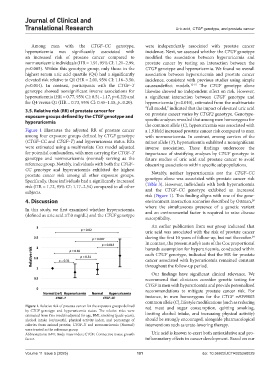
            Figure  1 illustrates the adjusted RR of prostate cancer   a 1.91fold increased prostate cancer risk compared to men
            among four exposure groups defined by CTGF genotype   with  normouricemia.  In  contrast,  among  carriers  of  the
            (CTGF–CC and CTGF–T) and hyperuricemia status. RRs   minor allele (T), hyperuricemia exhibited a nonsignificant
            were estimated using a multivariate Cox model adjusted   inverse association. These findings underscore the
            for potential confounders, with men carrying the CTGF–T   importance of stratifying analyses by CTGF genotype in
            genotype and normouricemia (normal) serving as the   future  studies of uric acid and prostate cancer  to avoid
            reference group. Notably, individuals with both the CTGF–  obscuring associations within specific subpopulations.
            CC genotype and hyperuricemia exhibited the highest
            prostate cancer risk among all other exposure groups.   Notably, neither hyperuricemia nor the  CTGF–CC
            Specifically, these individuals had a significantly increased   genotype alone was associated with prostate cancer risk
            risk (HR = 1.72, 95% CI: 1.17–2.54) compared to all other   (Table 3). However, individuals with both hyperuricemia
            subjects.                                          and the  CTGF–CC genotype exhibited an increased
                                                               risk (Figure 1). This finding aligns with one of the gene-
            4. Discussion                                      environment interaction scenarios described by Ottman,
                                                                                                            28
                                                               where the simultaneous presence of a genetic variant
            In this study, we first examined whether hyperuricemia   and an environmental factor is required to raise disease
            (defined as uric acid ≥7.0 mg/dL) and the CTGF genotype
                                                               susceptibility.
                                                                 An earlier publication from our group indicated that
                                                               uric acid was associated with the risk of prostate cancer
                                                               during the first 10 years of follow-up, but not thereafter.
                                                                                                            24
                                                               In contrast, the present study’s tests of the Cox proportional
                                                               hazards assumption for hyperuricemia, conducted within
                                                               each CTGF genotype, indicated that the HR for prostate
                                                               cancer associated with hyperuricemia remained constant
                                                               throughout the follow-up period.
                                                                 Our findings have significant clinical relevance. We
                                                               recommend that clinicians consider genetic testing for
                                                               CTGF in men with hyperuricemia and provide personalized
                                                               recommendations to mitigate prostate cancer risk. For
                                                               instance, in men homozygous for the  CTGF  rs9399005
                                                               common allele (C), lifestyle modifications (such as reducing
            Figure 1. Relative risk of prostate cancer for the exposure groups defined   red meat and sugar consumption, quitting smoking,
            by  CTGF  genotype  and  hyperuricemia  status.  The  relative  risks  were
            estimated from Cox models adjusted for age, BMI, smoking (pack-years),   limiting alcohol intake, and increasing physical activity)
            alcohol intake (oz/month), physical activity index, and percentage of   should be strongly encouraged, alongside pharmacological
            calories from animal protein;  CTGF–T and normouricemia (Normal)   interventions such as urate-lowering therapy.
            were treated as the reference group.
            Abbreviations: BMI: Body mass index; CTGF: Connective tissue growth   Uric acid is known to exert both antioxidative and pro-
            factor.                                            inflammatory effects in cancer development. Based on our


            Volume 11 Issue 5 (2025)                       101                         doi: 10.36922/JCTR025260029

