


Page 12 - JCTR-11-5
P. 12
Journal of Clinical and
            Translational Research                                                AI and LLMs in iPSC cardiac research


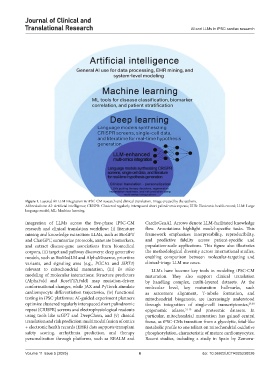
            Figure 1. Layered AI-LLM integration in iPSC-CM research and clinical translation. Image created by the authors.
            Abbreviations: AI: Artificial intelligence; CRISPR: Clustered regularly interspaced short palindromic repeats; EHR: Electronic health record; LLM: Large
            language model; ML: Machine learning.

            integration of LLMs across the five-phase iPSC-CM   CardioGenAI. Arrows denote LLM-facilitated knowledge
            research and clinical translation workflow: (i) literature   flow. Annotations highlight model-specific tasks. This
            mining and knowledge extraction: LLMs, such as BioGPT   framework emphasizes interpretability, reproducibility,
            and ChatGPT, summarize protocols, annotate biomarkers,   and  predictive  fidelity  across  patient-specific  and
            and extract disease-gene associations from biomedical   population-scale applications. This figure also illustrates
            corpora, (ii) target and pathway discovery: deep generative   the methodological diversity across international studies,
            models, such as BioMedLM and AlphaMissense, prioritize   enabling comparison between molecular-targeting and
            variants, and signaling axes (e.g.,  PGC1α and  SIRT3)   clinical-triage LLM use cases.
            relevant to mitochondrial maturation, (iii)  In silico   LLMs have become key tools in modeling iPSC-CM
            modeling of molecular interactions: Structure predictors   maturation. They also support clinical translation
            (AlphaFold  and RoseTTAFold)  map mutation-driven   by  handling complex,  multi-layered datasets.  At  the
            conformational changes, while JAX and PyTorch simulate   molecular level, key maturation hallmarks, such
            cardiomyocyte differentiation trajectories, (iv) functional   as sarcomere alignment, T-tubule formation, and
            testing in iPSC platforms: AI-guided experiment planners   mitochondrial biogenesis, are increasingly understood
            optimize clustered regularly interspaced short palindromic   through integration of single-cell transcriptomics, 29,30
            repeat (CRISPR) screens and electrophysiological readouts   epigenomic atlases, 31-35   and proteomic datasets. In
            using  tools  like  scGPT  and DeepChem,  and (v)  clinical   particular, mitochondrial maturation has gained central
            translation and risk prediction: multimodal fusion of omics   focus, as iPSC-CMs transition from a glycolytic, fetal-like
            + electronic health records (EHR) data supports transplant   metabolic profile to one reliant on mitochondrial oxidative
            safety scoring, arrhythmia prediction, and therapy   phosphorylation, characteristic of mature cardiomyocytes.
            personalization through platforms, such as REALM and   Recent studies,  including  a  study in  Spain  by  Zamora-


            Volume 11 Issue 5 (2025)                        6                          doi: 10.36922/JCTR025230026

