


Page 15 - JCTR-11-5
P. 15
Journal of Clinical and
            Translational Research                                                AI and LLMs in iPSC cardiac research


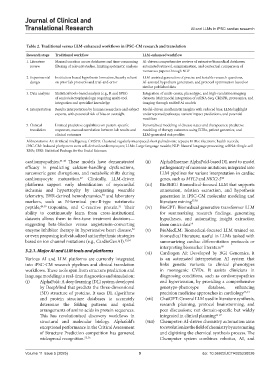
            Table 2. Traditional versus LLM‑enhanced workflows in iPSC‑CM research and translation
            Research stage  Traditional workflow              LLM‑enhanced workflow
            1.  Literature   Manual curation across databases and time-consuming   AI-driven comprehensive reviews of extensive biomedical databases;
              review    filtering of relevant studies, limiting systematic analysis  automated retrieval, summarization, and contextual comparison of
                                                              numerous papers through NLP
            2.  Experimental   Institution-based hypothesis formation, heavily reliant   LLM-assisted generation of precise and testable research questions,
              design    on prior lab protocols and trial-and-error  AI-assisted hypothesis generation, and protocol optimization based on
                                                              similar published data
            3. Data analysis  Statistical tools-based analysis (e.g., R and SPSS)   Integration of multi-omics, phenotypic, and high-resolution imaging
                        of omics/electrophysiology, requiring multi-tool   datasets. Multimodal integration of scRNA-Seq, CRISPR, proteomics, and
                        integration and specialist knowledge   imaging through unified AI models
            4. Interpretation  Results interpretation by human researchers and subject  Model-driven mechanistic insights with reduced bias; LLMs highlight
                        experts, with potential risk of bias or oversight  underreported pathways, variant impact predictions, and potential
                                                              modifiers
            5.  Clinical   Limited predictive capabilities on patient-specific   Personalized modeling of disease states and therapeutics; predictive
              translation  responses, manual correlation between lab results and   modeling of therapy outcomes using EHRs, patient genomics, and
                        clinical outcomes                     LLM-generated risk profiles
            Abbreviations: AI: Artificial intelligence; CRISPR: Clustered regularly interspaced short palindromic repeats; EHRs: Electronic health records;
            iPSC-CM: Induced pluripotent stem cell-derived cardiomyocytes; LLMs: Large language models; NLP: Natural language processing; scRNA: Single-cell
            RNA; SPSS: Statistical Package for the Social Sciences.

            cardiomyopathies. 44-46  These models have demonstrated   (ii)   AlphaMissense: AlphaFold-based DL used to model
            efficacy in predicting calcium-handling dysfunctions,    pathogenicity of missense mutations; integrated into
            sarcomeric gene disruptions, and metabolic shifts during   LLM pipelines for variant interpretation in cardiac
            cardiomyocyte maturation.  Clinically, LLM-driven        genes, such as MYL2 and NKX2-5 44
                                   47
            platforms  support  early  identification  of  myocardial   (iii)   BioBERT: Biomedical-focused LLM that supports
            ischemia and hypertrophy by integrating wearable         annotation, relation extraction, and hypothesis
                                            48
            telemetry, EHR-derived hemodynamics,  and laboratory     generation in iPSC-CM molecular modeling and
            markers, such as N-terminal pro-B-type natriuretic       literature mining 57,58
            peptide, 49,50   troponins, and C-reactive protein.  Their   (iv)   BioGPT: Biomedical generative transformer LLM
                                                   51
            ability to continuously learn from cross-institutional   for summarizing research findings, generating
            datasets  allows  them  to fine-tune  treatment decisions—  hypotheses, and automating insight extraction
            suggesting  beta-blocker  versus  angiotensin-converting   from omics data 59
            enzyme inhibitor therapy in hypertensive heart disease,    (v)   BioMedLM: Biomedical-focused LLM trained on
                                                         52
            or even proposing individualized antiarrhythmic strategies   biomedical literature; useful in LLMs tasked with
            based on ion channel mutations (e.g., CardioGenAI). 53,54  summarizing cardiac differentiation protocols or
                                                                     interpreting biomarker literature 60
            3.2.1. Major AI and LLM tools and platforms        (vi)   Cardiogen AI: Developed by BGI Genomics, it
            Various AI and LLM platforms are currently integrated    is an automated interpretation AI system that
            into iPSC-CM research pipelines and clinical translation   links genetic variants to clinical phenotypes
            workflows. These tools span from structure prediction and   in  monogenic  CVDs.  It  assists  clinicians in
            language modeling to real-time diagnostics and simulation:  diagnosing conditions, such as cardiomyopathies
            (i)   AlphaFold: A deep learning (DL) system developed   and hypertension, by providing a comprehensive
                  by DeepMind that predicts the three-dimensional    genotype-phenotype   database,  enhancing
                  (3D) structure of proteins. It uses DL algorithms   precision medicine approaches in cardiology 53,54
                  and protein structure databases to accurately   (vii)   ChatGPT: General LLM used in literature synthesis,
                  determine the folding patterns and spatial         research  planning, protocol brainstorming, and
                  arrangements of amino acids in protein sequences.   peer discussions; not domain-specific but widely
                  This has revolutionized discovery workflows in     integrated in clinical planning 21-27
                  structural and molecular biology. Alphafold’s   (viii)  Chemputer: AI-driven chemistry automation aims
                  exceptional performance in the Critical Assessment   to revolutionize the field of chemistry by automating
                  of Structure Prediction competition has garnered   and digitizing the chemical synthesis process. The
                  widespread recognition. 55,56                      Chemputer  system  combines  robotics,  AI,  and


            Volume 11 Issue 5 (2025)                        9                          doi: 10.36922/JCTR025230026

