


Page 14 - JCTR-9-4
P. 14
230                       AboEl-Azm et al. | Journal of Clinical and Translational Research 2023; 9(4): 222-235


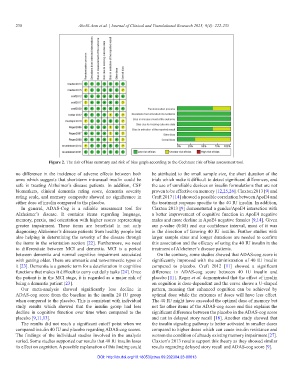
                     Figure 2. The risk of bias summary and risk of bias graph according to the Cochrane risk of bias assessment tool.
        no  difference  in  the  incidence  of  adverse  effects  between  both   be attributed to the small sample size, the short duration of the
        arms which suggests that short-term intranasal insulin could be   trials which make it difficult to detect significant differences, and
        safe  in  treating Alzheimer’s  disease  patients.  In  addition,  CSF   the use of unreliable devices or insulin formulations that are not
        biomarkers,  clinical  dementia  rating  score,  dementia  severity   proven to be effective on memory [12,25,26]. Claxton 2013 [9] and
        rating scale, and memory composite showed no significance in   Craft 2017 [14] showed a possible correlation between ApoE4 and
        either dose of insulin compared to the placebo.         the treatment response specific to the 40 IU insulin. In addition,
          In  general,  ADAS-Cog  is  a  reliable  assessment  tool  for   Claxton 2013 [9] demonstrated a gender/ApoE4 interaction with
        Alzheimer’s  disease.  It  contains  items  regarding  language,   a  better  improvement  of  cognitive  function  in ApoE4  negative
        memory, praxis, and orientation with higher scores representing   males and more decline in ApoE4 negative females [9,14]. Given
        greater  impairment.  These  items  are  beneficial  in  not  only   our  p-value  (0.08)  and  our  confidence  interval,  most  of  it  was
        diagnosing Alzheimer’s disease patients from healthy people but   in the direction of favoring 40 IU insulin. Further studies with
        also helping in determining the severity of the disease through   larger sample sizes and longer durations are needed to confirm
        the items in the orientation section [22]. Furthermore, we need   this association and the efficacy of using the 40 IU insulin in the
        to  differentiate  between  MCI  and  dementia.  MCI  is  a  period   treatment of Alzheimer’s disease patients.
        between  dementia  and  normal  cognitive  impairment  associated   On the contrary, some studies showed that ADAS-cog score is
        with getting older. There are amnestic and non-amnestic types of   significantly improved with the administration of 40 IU insulin
        it [23]. Dementia is a generic term for a deterioration in cognitive   compared  to  placebo.  Craft  2012  [11]  showed  a  significant
        functions that makes it difficult to carry out daily tasks [24]. Once   difference  in  ADAS-cog  score  between  40  IU  insulin  and
        the patient is in the MCI stage, it is regarded as a major risk of   placebo [11]. Reger et al. demonstrated that the effect of insulin
        being a dementia patient [23].                          on cognition is dose-dependent and the curve shows a U-shaped
          Our  meta-analysis  showed  significantly  less  decline  in   pattern,  meaning  that  enhanced  cognition  can  be  achieved  by
        ADAS-cog  score  from  the  baseline  in  the  insulin  20  IU  group   optimal dose while the extremes of doses will have less effect.
        when compared to the placebo. This is consistent with individual   The 40 IU might have exceeded the optimal dose of memory but
        study  results  which  showed  that  the  insulin  group  had  less   not for other items of the ADAS-cog score and this explains the
        decline  in  cognitive  function  over  time  when  compared  to  the   significant difference between the placebo in the ADAS-cog score
        placebo [9,11,13].                                      and not in delayed story recall [18]. Another study showed that
          The results did not reach a significant cutoff point when we   the insulin signaling pathway is better activated in smaller doses
        compared insulin 40 IU and placebo regarding ADAS-cog scores.   compared to higher doses which can cause insulin resistance and
        The  findings  of  the  individual  studies  involved  in  the  analysis   worsen the condition of already existing memory impairment [27].
        varied. Some studies supported our results that 40 IU insulin loses   Claxton’s 2013 results support this theory as they showed similar
        its effect on cognition. A possible explanation of this finding could   results regarding delayed story recall and ADAS-cog score [9].
                                          DOI: http://dx.doi.org/10.18053/jctres.09.202304.23-00013

