


Page 10 - JCTR-9-6
P. 10
374                       Sempere-Rubio et al. | Journal of Clinical and Translational Research 2023; 9(6): 369-380
        Table 2. Quality assessment scores (AMSTAR)
        Study                 1     2     3    4     5     6    7     8     9     10     11     12     13     Score
        Antunes et al. [19]   2     1     0    1     1     2     2    2     2     0      0      1      0        14
        Elizagaray-García et al. [20]  2  2  0  2    1     2     2    2     2     0      0      2      1        18
        García-Ríos et al. [21]  2  2     0    2     1     2     2    2     2     0      0      1      1        17
        Saracoglu et al. [22]  2    2     2    2     1     2     2    2     2     2      2      2      0        23
        Suso-Martí et al. [23]   1  2     2    0     2     2     1    2     2     2      2      2      2        22
        Notes: 1. Explicitly described to allow replication; 2. Adequate number and range of databases; 3. Alternative searches; 4. Adequate range of key words; 5. Non-English-language papers included
        in the search; 6. Inclusion criteria explicitly described to allow replication; 7. Excludes reviews which do not adequately address inclusion and exclusion criteria; 8. Two independent reviewers
        assessing selection bias; 9. Quality assessment explicitly described to allow replication; 10. Meta-analysis conducted on only homogeneous data or limitations to homogeneity discussed;
        11. Confidence intervals/effect sizes reported where possible; 12. Conclusions supported by the meta-analysis or other data analysis findings; 13. Conclusions address levels of evidence for each
        intervention/comparison

        Table 3. Summary of findings and quality of evidence (PAGAC)
                                           2018 PAGAC                                       Magnitude and     Overall
        Systematic review   Applicability  Generalizability  Risk of bias or   Quantity and   precision of effect  grade
        research questions                                 study limitations  consistency
        Pain intensity      Strong        Limited          Limited          Limited         Not assignable    Limited
        Quality of life     Strong        Limited          Limited          Limited         Not assignable    Limited
        Functionality       Moderate      Limited          Limited          Limited         Not assignable    Limited
        Anxiety             Moderate      Limited          Limited          Limited         Not assignable    Limited
        Pain catastrophizing  Moderate    Limited          Limited          Limited         Not assignable    Limited
        PAGAC: Physical activity guidelines advisory committee grading criteria


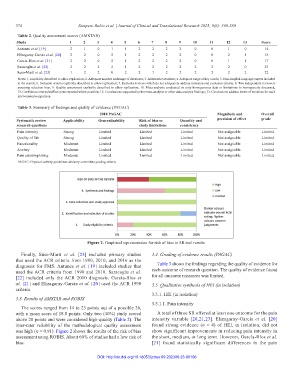
                                     Figure 2. Graphical representation for risk of bias in SR tool results.

          Finally, Suso-Martí  et al. [23] included primary studies   3.4. Grading of evidence results (PAGAC)
        that used the ACR criteria from 1990, 2010, and 2016 as the
        diagnosis for FMS. Antunes et al. [19] included studies that   Table 3 shows the findings regarding the quality of evidence for
        used the ACR criteria from 1990 and 2010. Saracoglu et al.   each outcome of research question. The quality of evidence found
        [22] included only the ACR 2010 diagnosis. García-Ríos  et   for all outcome measures was limited.
        al. [21] and Elizagaray-García et al. [20] used the ACR 1990   3.5. Qualitative synthesis of HEI (in isolation)
        criteria.
                                                                3.5.1. HEI (in isolation)
        3.3. Results of AMSTAR and ROBIS
                                                                3.5.1.1. Pain intensity
          The scores ranged from 14 to 23 points out of a possible 26,
        with a mean score of 18.8 points. Only two (40%) study scored   A total of three SR offered at least one outcome for the pain
        above 20 points and were considered high-quality (Table 2). The   intensity variable  [20,21,23]. Elizagaray-García  et al. [20]
        inter-rater reliability  of the methodological  quality  assessment   found strong evidence (n = 4) of HEI, in isolation, did not
        was high (κ = 0.91). Figure 2 shows the results of the risk of bias   show significant improvements in reducing pain intensity in
        assessment using ROBIS. About 60% of studies had a low risk of   the short, medium, or long term. However, García-Ríos et al.
        bias.                                                   [21] found statistically significant differences in the pain


                                          DOI: http://dx.doi.org/10.18053/jctres.09.202306.23-00108

