


Page 8 - JCTR-9-6
P. 8
372                       Sempere-Rubio et al. | Journal of Clinical and Translational Research 2023; 9(6): 369-380


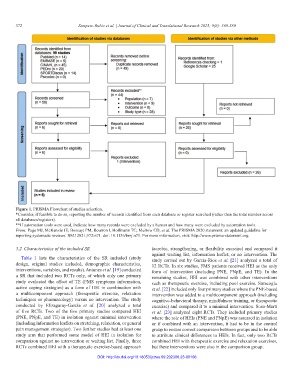
        Figure 1. PRISMA Flowchart of studies selection.
        *Consider, if feasible to do so, reporting the number of records identified from each database or register searched (rather than the total number across
        all databases/registers).
        **If automation tools were used, indicate how many records were excluded by a human and how many were excluded by automation tools.
        From: Page MJ, McKenzie JE, Bossuyt PM, Boutron I, Hoffmann TC, Mulrow CD, et al. The PRISMA 2020 statement: an updated guideline for
        reporting systematic reviews. BMJ 2021;372:n71. doi: 10.1136/bmj.n71. For more information, visit: http://www.prisma-statement.org.


        3.2. Characteristics of the included SR                 (aerobic, strengthening, or flexibility exercise) and compared it
                                                                against waiting list, information leaflet, or no intervention. The
          Table  1  lists  the  characteristics of the  SR included  (study   study carried out by García-Ríos et al. [21] analyzed a total of
        design, original  studies included,  demographic  characteristics,   12 RCTs. In six studies, FMS patients received HEI as the only
        interventions, variables, and results). Antunes et al. [19] conducted   form of intervention  (including PNE, PNpE, and  TE).  In the
        a SR that included two RCTs only, of which only one primary   remaining  studies, HEI was combined with other interventions
        study  evaluated  the  effect  of TE  (FMS  symptoms  information,   such as therapeutic exercise, including pool exercise. Saracoglu
        active coping strategies) as a form of HEI in combination with   et al. [22] included only four primary studies where the PNE-based
        a multicomponent  approach  (therapeutic  exercise,  relaxation   intervention was added to a multicomponent approach (including
        techniques or pharmacology) versus no intervention. The study   cognitive-behavioral therapy, mindfulness training, or therapeutic
        conducted  by  Elizagaray-García  et  al.  [20]  analyzed  a  total   exercise) and compared it to a minimal intervention. Suso-Martí
        of  five  RCTs.  Two  of  the  five  primary  studies  compared  HEI   et al. [23] analyzed eight RCTs. They included primary studies
        (PNE, PNpE, and TE) in isolation against minimal intervention   where the role of HEIs (PNE and PNpE) was assessed in isolation
        (including information leaflets on stretching, relaxation, or general   or if combined with an intervention, it had to be in the control
        pain management strategies). Two further studies had at least one   group to ensure correct comparison between groups and to be able
        study arm  that  performed  some  model  of HEI in  isolation  for   to attribute clinical differences to HEIs. In fact, only two RCTs
        comparison against no intervention or waiting list. Finally, three   combined HEI with therapeutic exercise and relaxation exercises,
        RCTs combined HEI with a therapeutic exercise-based approach   but these interventions were also in the comparison group.
                                          DOI: http://dx.doi.org/10.18053/jctres.09.202306.23-00108

