


Page 10 - MI-1-1
P. 10
Microbes & Immunity                                      RANTES/CCL5 and ezrin peptide RepG3 for long COVID


                                                               interfere with effective immunity to acute infections. A poor
                                                               RANTES response results in failure to prevent virus infection
                                                               from spreading from the site of initial infection to other
                                                               tissues and failure to prevent the development of a chronic
                                                               systemic infection, resulting in more severe disease. 20

                                                                 Expression of RANTES/CCL5 is important in mucosal
                                                               defense  in  response  to  viral  and  parasitic  infection.   In
                                                                                                          21
                                                               general, RANTES/CCL5 amplifies programmed antigen-
                                                               specific  mucosal immune responses by  activating  the
                                                               proliferation of antigen-specific T-lymphocytes. RANTES/
                                                               CCL5 is also a potent chemoattractant for CD8  cytotoxic
                                                                                                     +
                                                               T-cells, monocytes/macrophages, eosinophils, basophils,
                                                               natural killer (NK) cells, and memory T lymphocytes.
                                                               RANTES/CCL5 mediates degranulation of basophils
                                                               and induces degranulation of eosinophils. In addition,
                                                               administration of RANTES/CCL5 in vitro in cell culture
                                                               induces transendothelial migration of monocytes/
                                                               macrophages, NK cells, and T-cells. 22
                                                                 In mice, gene-knock-out experiments revealed the
                                                               importance of RANTES/CCL5 in infection defense.
                                                               Null-RANTES/CCL5 mutants have poor virus-specific
                                                               CD8  T-cell responses, express higher levels of inhibitory
                                                                   +
                                                               receptors consistent with severe T-cell exhaustion, and
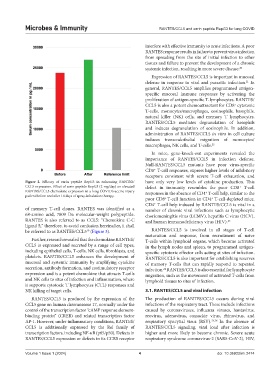
            Figure  2.  Efficacy  of ezrin  peptide  RepG3  in  enhancing  RANTES/  have only very low levels of cytokine production. This
            CCL5 expression. Effect of ezrin peptide RepG3 (2 mg/day) on elevated   defect in immunity resembles the poor CD8  T-cell
                                                                                                       +
            RANTES/CCL5 chemokine expression in a long COVID/vaccine injury   responses in the absence of CD4  T-cell help, similar to the
                                                                                        +
            patient before and after 10 days of spray-inhalation therapy.
                                                               poor CD8 T-cell function in CD4  T-cell-depleted mice.
                                                                       +
                                                                                           +
                                                               CD4  T-cell help induced by RANTES/CCL5 is vital in a
                                                                   +
            of memory T-cell clones. RANTES was identified as a   number of chronic viral infections such as lymphocytic
            68-amino acid, 7809 Da molecular-weight polypeptide.   choriomeningitis virus (LCMV), hepatitis C virus (HCV),
            RANTES is also referred to as CCL5: “Chemokine C-C   and human immunodeficiency virus (HIV). 23
            ligand 5;” therefore, to avoid confusion hereinafter, it shall
            be referred to as RANTES/CCL5  (Figure 3).           RANTES/CCL5  is  involved  in  all  stages  of  T-cell
                                      19
                                                               maturation and response, from recruitment of naive
              Further, research revealed that the chemokine RANTES/  T-cells within lymphoid organs, which become activated
            CCL5 is expressed and secreted by a range of cell types,   in the lymph nodes and spleen, to programmed antigen-
            including epithelial cells, T-cells, NK cells, fibroblasts, and   specific cytotoxic effector cells acting at sites of infection.
            platelets. RANTES/CCL5 enhances the development of   RANTES/CCL5 is also important for establishing reserves
            mucosal and systemic immunity by amplifying cytokine   of memory T-cells that can rapidly respond to repeated
            secretion, antibody formation, and costimulatory receptor   infection.  RANTES/CCL5 is also essential for lymphocyte
                                                                      24
            expression and is a potent chemokine that attracts T-cells   migration, such as the movement of activated T-cells from
            and NK cells to sites of infection and inflammation, where   lymphoid tissues to sites of infection.
            it supports cytotoxic T lymphocytes (CTL) responses and
            NK killing of target cells.                        3.1. RANTES/CCL5 and viral infection
              RANTES/CCL5 is produced by the expression of the   The production of RANTES/CCL5 occurs during viral
            CCL5 gene on human chromosome 17, normally under the   infections of the respiratory tract. These include infections
            control of the transcription factor “cAMP response element-  caused  by  coronaviruses,  influenza  viruses,  hantavirus,
            binding protein” (CREB) and related transcription factor   reovirus, adenovirus, coxsackie virus, rhinovirus, and
            AP-1. However, under inflammatory conditions, RANTES/  respiratory syncytial virus (RSV). 25,26  In the absence of
            CCL5  is  additionally  expressed  by  the  Rel  family  of   RANTES/CCL5 signaling,  viral load after  infection is
            transcription factors, including NF-κB (p65/p50). Defects in   higher and more likely to become chronic. Severe acute
            RANTES/CCL5 expression or defects in its CCR5 receptor   respiratory syndrome coronavirus-2 (SARS-CoV-2), HIV,


            Volume 1 Issue 1 (2024)                         4                                doi: 10.36922/mi.2474

