


Page 11 - MI-1-1
P. 11
Microbes & Immunity                                      RANTES/CCL5 and ezrin peptide RepG3 for long COVID


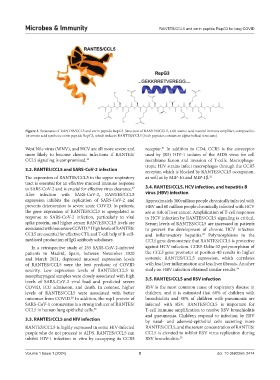
            Figure 3. Structures of RANTES/CCL5 and ezrin peptide RepG3. Structure of RANTES/CCL5, a 68-amino acid natural immune amplifier, compared to
            14-amino acid synthetic ezrin peptide RepG3, which induces RANTES/CCL5 (both peptides contain an alpha-helical structure).


                                                                      31
            West Nile virus (WNV), and HCV are all more severe and   receptor.  In addition to CD4, CCR5 is the coreceptor
            more likely to become chronic infections if RANTES/  used by (R5) HIV-1 isolates of the AIDS virus for cell
            CCL5 signaling is compromised. 23                  membrane fusion and invasion of T-cells. Macrophage-
                                                               tropic HIV strains infect macrophages through the CCR5
            3.2. RANTES/CCL5 and SARS-CoV-2 infection          receptor, which is blocked by RANTES/CCL5 occupation,
            The expression of RANTES/CCL5 in the upper respiratory   as well as by MIP-1α and MIP-1β. 32
            tract is essential for an effective mucosal immune response
                                                         27
            to SARS-CoV-2 and is crucial for effective virus clearance.    3.4. RANTES/CCL5, HCV infection, and hepatitis B
            After  infection with SARS-CoV-2, RANTES/CCL5      virus (HBV) infection
            expression inhibits the  replication of  SARS-CoV-2 and   Approximately 300 million people chronically infected with
            prevents deterioration to severe acute COVID. In patients,   HBV and 60 million people chronically infected with HCV
            the gene expression of RANTES/CCL5 is upregulated in   are at risk of liver cancer. Amplification of T-cell responses
            response to SARS-CoV-2 infection, particularly to viral   to HCV infection by RANTES/CCL5 signaling is critical.
            spike protein, and higher serum RANTES/CCL5 levels are   Serum levels of RANTES/CCL5 are increased in patients
            associated with less severe COVID.  High levels of RANTES/  to prevent the development of chronic HCV infection
                                      28
            CCL5 are essential for effective CTL and T-cell help of B-cell-  and inflammatory hepatitis.  Polymorphisms in the
                                                                                       33
            mediated production of IgG antibody subclasses.    CCL5 gene demonstrate that RANTES/CCL5 is protective
              In a retrospective study of 255 SARS-CoV-2-infected   against HCV infection. CCR5-Delta-32 polymorphism of
            patients in Madrid, Spain, between November 2020   the CCL5 gene promoter at position-40 results in higher
            and March 2021, depressed mucosal expression levels   systemic RANTES/CCL5 expression, which correlates
            of RANTES/CCL5 were the best predictor of COVID    with less liver inflammation and less liver fibrosis. Another
            severity. Low  expression levels  of RANTES/CCL5  in   study on HBV infection obtained similar results. 34
            nasopharyngeal samples were closely associated with high   3.5. RANTES/CCL5 and RSV infection
            levels of SARS-CoV-2 viral load and predicted severe
            COVID, ICU admission, and death. In contrast, higher   RSV is the most common cause of respiratory disease in
            levels of RANTES/CCL5 were associated with better   children, and it is estimated that 60% of children with
            outcomes from COVID.  In addition, the nsp1 protein of   bronchiolitis  and  40%  of  children  with  pneumonia  are
                               29
            SARS-CoV-1 coronavirus is a strong inducer of RANTES/  infected with RSV. RANTES/CCL5 is important for
            CCL5 in human lung epithelial cells. 30            T-cell immune amplification to resolve RSV bronchiolitis
                                                               and pneumonia. Children respond to infection by RSV
            3.3. RANTES/CCL5 and HIV infection                 by nasal-  and adenoid-epithelial cells secreting more
            RANTES/CCL5 is highly expressed in some HIV-infected   RANTES/CCL5, and the serum concentration of RANTES/
            people who do not proceed to AIDS. RANTES/CCL5 can   CCL5 is elevated to inhibit RSV virus replication during
            inhibit HIV-1 infection  in  vitro by occupying its CCR5   RSV bronchiolitis. 35


            Volume 1 Issue 1 (2024)                         5                                doi: 10.36922/mi.2474

