


Page 16 - MI-1-1
P. 16
Microbes & Immunity                                      RANTES/CCL5 and ezrin peptide RepG3 for long COVID


                                                               Th2-type cytokines. RANTES/CCL5 also amplifies the
                                                               numbers of antibody-forming cells (AFCs)  in both the
                                                               mucosa and systemically, resulting in increased antigen-
                                                               specific antibody titers both in mucosal secretions and in
                                                               the blood.

                                                                 In mice, higher antigen-specific serum antibody titers
                                                               can be induced by nasal administration of antigen together
                                                               with RANTES/CCL5. For example, after three intranasal
                                                               doses of 100  µg of RANTES/CCL5 plus OVA antigen,
                                                               significantly higher serum titers of antigen-specific IgM
                                                               and IgG antibodies are produced relative to antigen
                                                               treatment alone. After RANTES/CCL5 plus antigen nasal/
                                                               mucosal administration, the most prevalent antigen-
                                                               specific antibody responses in the blood serum were
                                                               subclasses of IgG: IgG2a, IgG2b, IgG3, and IgG1, with later
                                                               elevation of IgG titers in the vaginal mucosa.

                                                                 Soluble antigen plus RANTES/CCL5 induces the
                                                               proliferation of antigen-specific AFCs. Coadministration
                                                               of antigen plus RANTES/CCL5 significantly increased
                                                               antigen-specific IgA AFCs in the nasal cavity, upper and
                                                               lower respiratory tracts, Peyer’s patches, and intestine, and
                                                               also substantially increased antigen-specific IgM and IgG
                                                               AFCs in the spleen and respiratory tract lymphocytes but
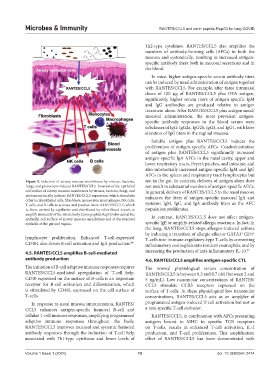
            Figure 5. Infection of airway mucous membranes by viruses, bacteria,   not in the gut. In contrast, delivery of antigen alone does
            fungi, and protozoans induces RANTES/CCL5. Invasion of the epithelial   not result in substantial numbers of antigen-specific AFCs.
            cell surface of airway mucous membranes by viruses, bacteria, fungi, and   In general, delivery of RANTES/CCL5 to the nasal mucosa
            protozoans locally induces RANTES/CCL5 expression, which stimulates   enhances the titers of antigen-specific mucosal IgA and
            other local epithelial cells, fibroblasts, monocytes, macrophages, NK cells,
            T-cells, and B-cells to activate and produce more RANTES/CCL5, which   systemic IgM, IgG, and IgA antibody titers as the AFC
            is, then, carried by capillaries and distributed by other blood vessels to   population proliferates.
            amplify immunity of the whole body. Ezrin peptide RepG3 also acts at the   In contrast, RANTES/CCL5 does not affect antigen-
            epithelial cell surface of airway mucous membranes and at the mucosal
            epithelia of the gut and vagina.                   specific IgE or amplify-related allergic reactions. In fact, in
                                                               the lung, RANTES/CCL5 stops allergen-induced asthma
                                                               by inducing a transition of allergic effector GATA3  CD4
                                                                                                        +
                                                                                                             +
            lymphocyte proliferation. Enhanced T-cell-expressed   T-cells into immune-regulatory-type T-cells by converting
            CD40L also drives B-cell activation and IgA production. 64  inflammatory eosinophils into resident eosinophils, and by
            4.5. RANTES/CCL5 amplifies B-cell-mediated         increasing the production of anti-inflammatory IL-10. 65
            antibody production                                4.6. RANTES/CCL5 amplifies antigen-specific CTL
            The initiation of B-cell adaptive immune responses requires   The normal physiological serum concentration of
            RANTES/CCL5-mediated upregulation of T-cell help.   RANTES/CCL5 is between 0.2 and 0.7 nM (between 2 and
            CD40 expressed on the surface of B-cells is an important   5  ng/mL).  Low nanomolar  concentrations  of  RANTES/
            receptor for B-cell activation and differentiation, which   CCL5  stimulate CCR5  receptors expressed on  the
            is stimulated by CD40L expressed on the cell surface of   surface of T-cells. At these physiological low nanomolar
            T-cells.                                           concentrations,  RANTES/CCL5  acts  as  an  amplifier  of
              In response to nasal mucosa immunization, RANTES/  programmed antigen-induced T-cell activation but not as
            CCL5 enhances antigen-specific humoral B-cell and   a non-specific T-cell activator.
            cellular T-cell immune responses, amplifying programmed   RANTES/CCL5, in combination with APCs presenting
            adaptive immune responses throughout the body.     antigens bound to MHC to specific TCR receptors
            RANTES/CCL5 improves mucosal and systemic humoral   on  T-cells,  results  in  enhanced  T-cell  activation,  IL-2
            antibody responses through the induction of T-cell help   production,  and  T-cell  proliferation.  This  amplification
            associated with Th1-type cytokines and lower levels of   effect of RANTES/CCL5 has been demonstrated with


            Volume 1 Issue 1 (2024)                         10                               doi: 10.36922/mi.2474

