


Page 37 - MI-1-2
P. 37
Microbes & Immunity                                                 Host receptors in immunogenic cell death


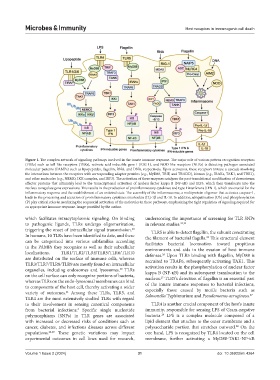
            Figure 1. The complex network of signaling pathways involved in the innate immune response. The major role of various pattern recognition receptors
            (PRRs) such as toll-like receptors (TLRs), retinoic acid-inducible gene I (RIG-1), and NOD-like receptors (NLRs) is detecting pathogen-associated
            molecular patterns (PAMPs) such as lipopeptides, flagellin, RNA, and DNA, respectively. Upon activation, these receptors initiate a cascade involving
            the interactions between the receptors with corresponding adaptor proteins (e.g., MyD88, TRIF, and TRADD), kinases (e.g., IRAKs, TAK1, and TBK1),
            and other molecules (e.g., NEMO, IKK complex, and IRF3). The activation of these enzymes catalyzes the post-translational modification of downstream
            effector proteins that ultimately lead to the transcriptional activation of nuclear factor kappa B (NF-κB) and IRF3, which then translocate into the
            nucleus to regulate gene expressions. This results in the production of proinflammatory cytokines and type I interferons (IFN-I), which are crucial for the
            inflammatory response and the establishment of an antiviral state. The assembly of the inflammasome, a multiprotein oligomer that activates caspase-1,
            leads to the processing and secretion of proinflammatory cytokines interleukin (IL)-1β and IL-18. In addition, ubiquitination (Ub) and phosphorylation
            (P) play critical roles in mediating the sequential activation of the molecules in these pathways, emphasizing the tight regulation of signaling required for
            an appropriate immune response. Image provided by the author.

            which facilitates intracytoplasmic signaling. On binding   underscoring the importance of screening for TLR SNPs
            to pathogenic ligands, TLRs undergo oligomerization,   in relevant studies. 23,24
            triggering the onset of intracellular signal transmission.    TLR5 is able to detect flagellin, the subunit constituting
                                                         20
            In humans, 10 TLRs have been identified to date, and these   the filament of bacterial flagella.  This structural element
                                                                                         25
            can  be categorized  into  various subfamilies  according   facilitates bacterial  locomotion toward  propitious
            to the PAMPs they recognize as well as their subcellular   environments and aids in the evasion of host immune
            localizations.  TLR1/TLR2/TLR4/TLR5/TLR6/TLR10     defenses.  Upon TLR5 binding with flagellin, MyD88 is
                                                                      26
            are distributed on the surface of immune cells, whereas   recruited to TRAF6, subsequently activating TAK1. This
            TLR3/TLR7/TLR8/TLR9 are mostly found on intracellular   activation results in the phosphorylation of nuclear factor
            organelles, including endosomes and lysosomes.  TLRs   kappa B (NF-κB) and its subsequent translocation to the
                                                    20
            on the cell surface can only recognize portions of bacteria,   nucleus.  TLR5’s detection of flagellin is an essential part
                                                                     27
            whereas TLRs on the endo-lysosomal membranes can bind   of  the  innate  immune  responses  to  bacterial  infections,
            to components of the host cell, thereby activating a wider
                             21
            variety of outcomes.  Among these TLRs, TLR5, and   especially those caused by motile bacteria such as
                                                                                                           27
            TLR4 are the most extensively studied TLRs with regard   Salmonella Typhimurium and Pseudomonas aeruginosa.
            to their involvement in sensing canonical components   TLR4 is another crucial component of the host’s innate
            from bacterial infections.  Specific single nucleotide   immunity, responsible for sensing LPS of Gram-negative
                                  3
            polymorphisms (SNPs) in  TLR  genes  are  associated   bacteria.  LPS is a complex molecule composed of a
                                                                      28
            with  increased or  decreased risks  of  conditions  such  as   lipid element that attaches to the outer membrane and a
                                                                                                     28
            cancer, diabetes, and infectious diseases across different   polysaccharide portion that stretches outward.  On the
            populations. 22,23  These genetic variations may impact   one hand, LPS is recognized by TLR4 located on the cell
            experimental outcomes in cell lines used for research,   membrane, further activating a MyD88-TAK1-NF-κB

            Volume 1 Issue 2 (2024)                         31                               doi: 10.36922/mi.4264

