


Page 41 - MI-1-2
P. 41
Microbes & Immunity                                                 Host receptors in immunogenic cell death


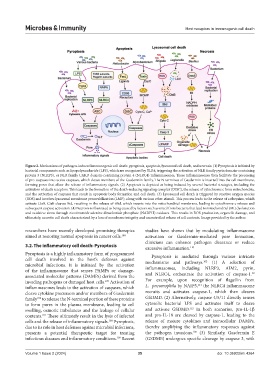
            Figure 2. Mechanisms of pathogen-induced immunogenic cell death: pyroptosis, apoptosis, lysosomal cell death, and necrosis. (1) Pyroptosis is initiated by
            bacterial components such as lipopolysaccharide (LPS), which are recognized by TLR4, triggering the activation of NLR family pyrin domain-containing
            protein 3 (NLRP3), or NLR family CARD domain-containing protein 4 (NLRC4) inflammasomes. These inflammasomes then facilitate the processing
            of pro-caspases into active caspases, which cleave members of the Gasdermin family. The N-terminus of Gasdermin is inserted into the cell membrane,
            forming pores that allow the release of inflammatory signals. (2) Apoptosis is depicted as being induced by several bacterial strategies, including the
            activation of death receptors. This leads to the formation of the death-inducing signaling complex (DISC), the release of cytochrome c from mitochondria,
            and the activation of caspases that result in apoptotic body formation and cell death. (3) Lysosomal cell death is triggered by reactive oxygen species
            (ROS) and involves lysosomal membrane permeabilization (LMP), along with various other stimuli. This process leads to the release of cathepsins, which
            activate CtsB. CtsB cleaves Bid, resulting in the release of tBid, which inserts into the mitochondrial membrane, leading to cytochrome c release and
            subsequent caspase activation. (4) Necrosis is illustrated as being caused by factors such as uracil from bacteria that lead to mitochondrial (Mt) dysfunction
            and oxidative stress through nicotinamide adenine dinucleotide phosphate (NADPH) oxidases. This results in ROS production, organelle damage, and
            ultimately, necrotic cell death characterized by a loss of membrane integrity and uncontrolled release of cell contents. Image provided by the author.

            researchers have recently developed promising therapies   studies have shown that by modulating inflammasome
            aimed at restoring normal apoptosis in cancer cells. 104  activation or Gasdermin-mediated pore formation,
                                                               clinicians can enhance pathogen clearance or reduce
            3.2. The inflammatory cell death: Pyroptosis
                                                               excessive inflammation. 110
            Pyroptosis is a highly inflammatory form of programmed   Pyroptosis  is  mediated  through  various  intricate
            cell  death  involved  in  the  host’s  defenses  against                   102
            microbial infections. It is initiated by the activation   mechanisms and pathways.   (1) A selection of
            of  the  inflammasome  that  senses  PAMPs  or  damage-  inflammasomes, including NLRP3, AIM2, pyrin,
                                                                                                            39
            associated molecular patterns (DAMPs) derived from the   and NLRC4, orchestrate the activation of caspase-1.
                                              105
            invading pathogens or damaged host cells.  Activation of   For example, upon recognition of flagellin from
                                                                                     111
            inflammasomes leads to the activation of caspases, which   L.  pneumophila by NAIP5,  the NLRC4 inflammasome
            cleave cytokine precursors and/or members of Gasdermin   recruits and activates caspase-1, which then cleaves
            family  to release the N-terminal portion of these proteins   GSDMD. (2) Alternatively, caspase 4/5/11 directly senses
                 106
            to form pores in the plasma membrane, leading to cell   cytosolic bacterial LPS and activates itself to cleave
                                                                                  112
            swelling, osmotic imbalances and the leakage of cellular   and activate GSDMD.  In both scenarios, pro-IL-1β
            contents.  These ultimately result in the lysis of infected   and  pro-IL-18  are  cleaved  by  caspase-1,  leading  to  the
                   107
            cells and the release of inflammatory signals.  Pyroptosis,   release  of  mature cytokines  and  intracellular  DAMPs,
                                               108
            due to its role in host defenses against microbial infections,   thereby amplifying the inflammatory responses against
            presents a potential therapeutic target for treating   the pathogen invasions.   (3) Similarly, Gasdermin E
                                                                                   105
            infectious diseases and inflammatory conditions.  Recent   (GSDME) undergoes specific cleavage by caspase 3, with
                                                   109
            Volume 1 Issue 2 (2024)                         35                               doi: 10.36922/mi.4264

