


Page 80 - MI-1-2
P. 80
Microbes & Immunity                                          Hydrogen alleviates non-alcoholic fatty liver disease


                         A                                       B


                                                                 C


                         D                                           E


                                                                      F


                        G                             H                       I


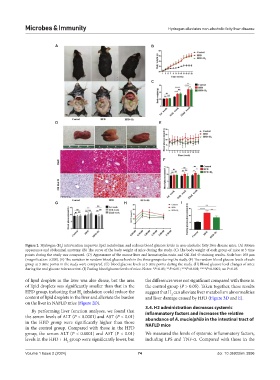
            Figure 2. Hydrogen (H ) intervention improves lipid metabolism and reduces blood glucose levels in non-alcoholic fatty liver disease mice. (A) Mouse
                           2
            appearance and abdominal anatomy. (B) The curve of the body weight of mice during the study. (C) The body weight of each group of mice at 3 time
            points during the study was compared. (D) Appearance of the mouse liver and hematoxylin-eosin and Oil Red O staining results. Scale bar: 100 µm
            (magnification: ×200). (E) The variation in random blood glucose levels in the three groups during the study. (F) The random blood glucose levels of each
            group at 3 time points in the study were compared. (G) Blood glucose levels at 3 time points during the study. (H) Blood glucose level changes of mice
            during the oral glucose tolerance test. (I) Fasting blood glucose levels of mice. Notes: *P<0.05; **P<0.01; ***P<0.001; ****P<0.0001; ns: P>0.05.

            of lipid droplets in the liver was also dense, but the area   the differences were not significant compared with those in
            of lipid droplets was significantly smaller than that in the   the control group (P > 0.05). Taken together, these results
            HFD group, indicating that H  inhalation could reduce the   suggest that H  can alleviate liver metabolism abnormalities
                                   2
                                                                          2
            content of lipid droplets in the liver and alleviate the burden   and liver damage caused by HFD (Figure 3D and E).
            on the liver in NAFLD mice (Figure 2D).
                                                               3.4. H2 administration decreases systemic
              By performing liver function analyses, we found that   inflammatory factors and increases the relative
            the serum levels of ALT (P < 0.0001) and AST (P < 0.01)   abundance of A. muciniphila in the intestinal tract of
            in  the  HFD  group  were significantly  higher  than  those   NAFLD mice
            in the control group. Compared with those in the HFD
            group, the serum ALT (P < 0.0001) and AST (P < 0.01)   We measured the levels of systemic inflammatory factors,
            levels in the HFD + H  group were significantly lower, but   including LPS and TNF-α. Compared with those in the
                              2

            Volume 1 Issue 2 (2024)                         74                               doi: 10.36922/mi.3896

