


Page 78 - MI-1-2
P. 78
Microbes & Immunity                                          Hydrogen alleviates non-alcoholic fatty liver disease


                         A


                         B


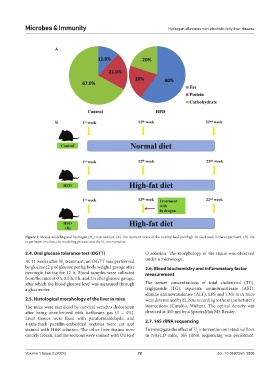
            Figure 1. Mouse modeling and hydrogen (H ) intervention. (A) The nutrient ratios of the normal feed and high-fat feed used in the experiment. (B) The
                                        2
            experiment involves the modeling process and the H  intervention.
                                             2
            2.4. Oral glucose tolerance test (OGTT)            O solution. The morphology of the tissue was observed

            At 11 weeks after H  treatment, an OGTT was performed   under a microscope.
                            2
            by glucose (2 g of glucose per kg body weight) gavage after   2.6. Blood biochemistry and inflammatory factor
            overnight fasting for 12 h. Blood samples were collected   measurement
            from the mice at 0 h, 0.5 h, 1 h, and 2 h after glucose gavage,
            after which the blood glucose level was measured through   The serum concentrations of total cholesterol (TC),
            a glucometer.                                      triglyceride (TG), aspartate  aminotransferase (AST),
                                                               alanine aminotransferase (ALT), LPS and TNF-α in mice
            2.5. Histological morphology of the liver in mice  were determined by ELISAs according to the manufacturer’s
            The mice were sacrificed by cervical vertebra dislocation   instructions  (Cusabio,  Wuhan). The  optical density was
            after being anesthetized with isoflurane gas (3 – 4%).   detected at 450 nm by a SpectraMax M5 Reader.
            Liver tissues were fixed with paraformaldehyde, and   2.7. 16S rRNA sequencing
            4-µm-thick paraffin-embedded sections were cut and
            stained with H&E solution. The other liver tissues were   To investigate the effect of H  intervention on intestinal flora
                                                                                     2
            quickly frozen, and the sections were stained with Oil Red   in NAFLD mice, 16S rRNA sequencing was performed.


            Volume 1 Issue 2 (2024)                         72                               doi: 10.36922/mi.3896

