


Page 81 - MI-1-2
P. 81
Microbes & Immunity                                          Hydrogen alleviates non-alcoholic fatty liver disease


            A                        B                   C                    F


                                     D                   E


            G                               H                              I


            J                   K                    L                               M


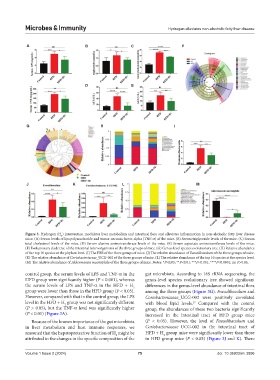
            Figure 3. Hydrogen (H ) intervention modulates liver metabolism and intestinal flora and alleviates inflammation in non-alcoholic fatty liver disease
                           2
            mice. (A) Serum levels of lipopolysaccharide and tumor necrosis factor-alpha (TNF-α) of the mice. (B) Serum triglyceride levels of the mice. (C) Serum
            total cholesterol levels of the mice. (D) Serum alanine aminotransferase levels of the mice. (E) Serum aspartate aminotransferase levels of the mice.
            (F) Evolutionary clade tree of the intestinal microorganisms of the three groups of mice. (G) Genus-level species evolutionary tree. (H) Relative abundance
            of the top 10 species at the phylum level. (I) The FBR of the three groups of mice. (J) The relative abundance of Faecalibaculum of the three groups of mice.
            (K) The relative abundance of Coriobacteriaceae_UCG-002 of the three groups of mice. (L) The relative abundance of the top 10 species at the species level.
            (M) The relative abundance of Akkermansia muciniphila of the three groups of mice. Notes: *P<0.05; **P<0.01; ***P<0.001; ****P<0.0001; ns: P>0.05.

            control group, the serum levels of LPS and TNF-α in the   gut microbiota. According to 16S rRNA sequencing, the
            HFD group were significantly higher (P < 0.001), whereas   genus-level species evolutionary tree showed significant
            the serum levels of LPS and TNF-α in the HFD + H    differences in the genus-level abundance of intestinal flora
                                                          2
            group were lower than those in the HFD group (P < 0.05).   among the three groups (Figure 3G). Faecalibaculum and
            However, compared with that in the control group, the LPS   Coriobacteriaceae_UCG-002 were positively correlated
            level in the HFD + H  group was not significantly different   with blood lipid levels.  Compared with the control
                                                                                   17
                             2
            (P > 0.05), but the TNF-α level was significantly higher   group, the abundances of these two bacteria significantly
            (P < 0.01) (Figure 3A).                            increased in the intestinal tract of HFD group mice
              Because of the known importance of the gut microbiota   (P < 0.05). However, the level of  Faecalibaculum and
            in liver metabolism and host immune responses, we   Coriobacteriaceae_UCG-002 in the intestinal tract of
            reasoned that the hepatoprotective function of H  might be   HFD + H  group mice were significantly lower than those
                                                                       2
                                                  2
            attributed to the changes in the specific composition of the   in HFD group mice (P < 0.05) (Figure 3J and K). There
            Volume 1 Issue 2 (2024)                         75                               doi: 10.36922/mi.3896

