


Page 69 - MI-2-1
P. 69
Microbes & Immunity                                                     Copper and cuproptosis in immunity


            encompassing liver problems such as hepatitis, cirrhosis,   4. The role of copper and cuproptosis in
            and liver failure;  neurological issues such as movement   Mycobacterium tuberculosis and their
                         27
            disorders, cognitive impairments, and behavioral changes;    broader implications
                                                         28
            and ocular manifestations, notably the Kayser–Fleischer ring
            – a green or brown deposit at the corneal edge. Additional   Copper plays a crucial role in cellular function, but its
            complications associated with Wilson’s disease include   dysregulation can lead to toxicological effects, particularly
            kidney injury, anemia, and joint pain. 29          in  the  context  of  infections  such  as M. tuberculosis.
                                                               The mechanisms underlying copper-induced cell
              Menkes disease is a rare X-linked genetic disorder
            primarily  caused  by  mutations  in  the  ATP7A  gene,   death primarily involve oxidative stress, mitochondrial
                                                                                             50
                                                               damage, and inflammatory responses.  A comprehensive
            causing  disruption  to  the  absorption  and  transport  of   understanding of these processes is essential, especially in
            copper in the body.  This leads to a cellular deficiency   the context of developing therapeutic strategies targeting
                            30
            of copper, with symptoms often appearing within a few   copper metabolism disorders, such as Wilson’s disease,
            months of birth.  Affected individuals may experience   which is characterized by excessive copper accumulation in
                          31
            growth retardation, neurological issues such as mental   the body. Within the copper-related network, several key
            retardation, seizures, and poor motor coordination, as well   genes significantly influence cellular responses to varying
            as distinct hair abnormalities characterized by thinning   copper levels. Genes such as ATP7A and ATP7B are pivotal
            and copper coloration.  Additional complications may   for maintaining copper homeostasis, they facilitate copper
                               32
            include abnormal bone development and low immune   transport and excretion, thereby preventing toxicity.
                                                                                                            40
            function. 33,34  Menkes disease is diagnosed by a combination   In addition to these transport mechanisms, antioxidant
            of clinical evaluation, biochemical tests for measuring   genes such as superoxide dismutase 1 and glutathione
            blood levels of copper and related proteins (such as   peroxidase  are  critical  in mitigating oxidative stress
            ceruloplasmin), and genetic testing to confirm  ATP7A   associated with elevated copper levels. 51,52  The regulation
            mutations.   Current  treatment strategies  mainly  involve   of cell fate in response to copper stress is also governed
                    35
            copper supplementation, particularly with copper-amino   by apoptosis-related genes. For instance, genes such as
            acid complexes, alongside symptomatic management to   Bcl-2 and  Bax play vital roles in the apoptotic pathways
            address neurological symptoms, though the effectiveness   that determine whether a cell survives or undergoes
            of these interventions is limited. 36
                                                               programmed cell death under conditions of copper-
              In addition to Wilson’s disease and Menkes disease,   induced stress.  In addition, inflammatory-related genes
                                                                           51
            abnormal copper metabolism can be linked to other   involved in the nuclear factor kappa B signaling pathway
            conditions. Copper deficiency may arise from malnutrition   further complicate the interplay between cell survival and
                                                                                              53
            or absorption disorders, such as Crohn’s disease, and can   death in environments rich in copper.  The activation of
            manifest as anemia, immune dysfunction, and osteoporosis.    this pathway is often linked to the inflammatory response
                                                         37
            Conversely, while relatively rare, copper overload can occur   associated with infection and stress, influencing the
            due to certain liver and kidney diseases or prolonged use of   overall cellular outcome. Recent research has shed light
            specific medications, such as oral contraceptives, leading to   on the protective role of the cuproptosis regulatory factor
            copper accumulation and potential toxicity. 38     ferredoxin 1 (FDX1) in clear cell renal cell carcinoma.  The
                                                                                                         54
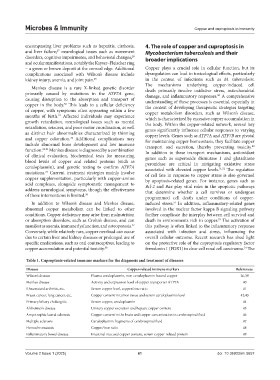
            Table 1. Cuproptosis‑related immune markers for the diagnosis and treatment of diseases

            Disease                                    Copper‑related immune markers                 References
            Wilson’s disease            Plasma ceruloplasmin, non-ceruloplasmin-bound copper           26,39
            Menkes disease              Activity and expression level of copper transporter ATP7A       40
            Rheumatoid arthritis, etc.  Serum copper level, copper/zinc ratio                           41
            Breast cancer, lung cancer, etc.  Copper content in tumor tissue and serum ceruloplasmin level  42,43
            Primary biliary cholangitis  Serum copper, ceruloplasmin                                    44
            Alzheimer’s disease         Urinary copper excretion and hepatic copper content             45
            Amyotrophic lateral sclerosis  Copper content in the brain and copper concentration in cerebrospinal fluid  46
            Multiple sclerosis          Ceruloplasmin fragments of cerebrospinal fluid                  47
            Hemochromatosis             Copper/iron ratio                                               48
            Inflammatory bowel disease  Intestinal mucosal copper content, serum copper-related protein  49


            Volume 2 Issue 1 (2025)                         61                               doi: 10.36922/mi.5657

