


Page 72 - MI-2-1
P. 72
Microbes & Immunity                                                     Copper and cuproptosis in immunity


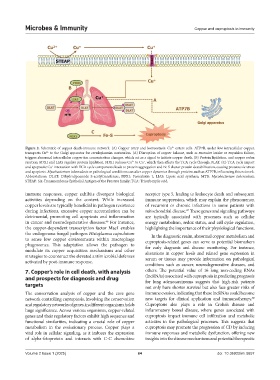
            Figure 2. Schematic of copper death-immune network. (A) Copper entry and homeostasis: Cu  enters cells. ATP7B, under low intracellular copper,
                                                                          2+
            transports Cu  to the Golgi apparatus for ceruloplasmin maturation. (A) Disruption of copper balance, such as excessive intake or expulsion failure,
                     2+
            triggers abnormal intracellular copper ion concentration changes, which act as a signal to initiate copper death. (B) Protein lipidation, and copper redox
            reaction: FDX1 and LIAS regulate protein lipidation. FDX1 reduces Cu  to Cu , which then affects the TCA cycle through DLAT. (C) TCA cycle impact
                                                         2+
                                                              +
            and apoptosis: Cu  interaction with TCA cycle components leads to protein aggregation and Fe-S cluster protein destabilization, causing proteotoxic stress
                       +
            and apoptosis. Mycobacterium tuberculosis or pathological conditions can alter copper dynamics through proteins such as ATP7B, influencing this network.
            Abbreviations: DLAT: Dihydrolipoamide S-acetyltransferase; FDX1: Ferredoxin 1; LIAS: Lipoic acid synthase; MTB:  Mycobacterium tuberculosis;
            STEAP: Six-Transmembrane Epithelial Antigen of the Prostate family; TCA: Tricarboxylic acid.
            immune  responses,  copper  exhibits  divergent  biological   receptor type 5, leading to leukocyte death and subsequent
            activities depending on the context. While increased   immune suppression, which may explain the phenomenon
            copper levels are typically beneficial in pathogen resistance   of recurrent or chronic infections in some patients with
            during infections, excessive copper accumulation can be   mitochondrial disease.  These genes and signaling pathways
                                                                                67
            detrimental, promoting cell apoptosis and inflammation   are typically associated with processes such as cellular
                                              66
            in cancer and neurodegenerative diseases.  For instance,   energy metabolism, redox status, and cell cycle regulation,
            the copper-dependent transcription factor Mac1 enables   highlighting the importance of their physiological functions.
            the endogenous fungal pathogen Histoplasma capsulatum   In the diagnostic realm, abnormal copper metabolism and
            to sense low copper environments within macrophage   cuproptosis-related genes can serve as potential biomarkers
            phagosomes. This adaptation allows the pathogen to   for early diagnosis and disease monitoring. For instance,
            modulate its copper acquisition mechanisms and other   alterations in copper levels and related gene expression in
            strategies to counteract the elevated antimicrobial defenses   serum or tissues may provide information on pathological
            activated by post-immune response.
                                                               conditions such as cancer, neurodegenerative diseases, and
            7. Copper’s role in cell death, with analysis      others. The potential  value  of  16  long  non-coding  RNAs
            and prospects for diagnosis and drug               (lncRNAs) associated with cuproptosis in predicting prognosis
                                                               for lung adenocarcinoma suggests that high-risk patients
            targets                                            not only have shorter survival but also face greater risks of
            The conservation analysis of copper and the core gene   immune evasion, indicating that these lncRNAs could become
            network controlling cuproptosis, involving the conservation   new targets for clinical application and immunotherapy.
                                                                                                            68
            and regulatory networks of genes, in different organisms holds   Cuproptosis also plays a role in Crohn’s disease and
            huge significance. Across various organisms, copper-related   inflammatory bowel disease, where genes associated with
            genes and their regulatory factors exhibit high sequence and   cuproptosis impact immune cell infiltration and metabolic
            functional similarities, indicating a crucial role of copper   activities  in  the  pathological  processes.  This  suggests  that
            metabolism in the evolutionary process. Copper plays a   cuproptosis may promote the progression of CD by inducing
            vital role in cellular signaling, as it induces the expression   immune responses and metabolic dysfunction, offering new
            of alpha-fetoprotein and interacts with C-C chemokine   insights into the disease mechanisms and potential therapeutic


            Volume 2 Issue 1 (2025)                         64                               doi: 10.36922/mi.5657

