


Page 71 - MI-2-1
P. 71
Microbes & Immunity                                                     Copper and cuproptosis in immunity


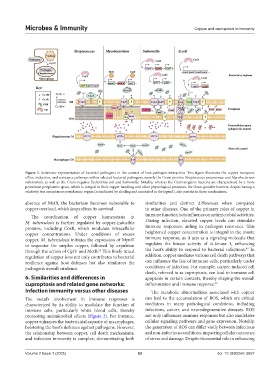
            Figure  1.  Schematic representation of bacterial pathogens in the context of host-pathogen interaction. This  figure illustrates the copper transport,
            efflux, induction, and resistance pathways within selected bacterial pathogens, namely the Gram-positive Streptococcus pneumoniae and Mycobacterium
            tuberculosis, as well as the Gram-negative Escherichia coli and Salmonella. Notably, whereas the Gram-negative bacteria are characterized by a more
            prominent periplasmic space, which is integral to their copper handling and other physiological processes, the Gram-positive bacteria, despite having a
            relatively less conspicuous periplasmic region (as indicated by shading and annotated in the legend), also partake in these mechanisms.

            absence of MctB, the bacterium becomes vulnerable to   similarities and distinct differences when compared
            copper overload, which jeopardizes its survival.   to other diseases. One of the primary roles of copper in
              The coordination of copper homeostasis in        immune function is its influence on antimicrobial activities.
            M.  tuberculosis is further regulated by copper-inducible   During infection, elevated copper levels can stimulate
            proteins, including CosR, which modulate intracellular   immune responses, aiding in pathogen resistance. This
            copper concentrations. Under conditions of excess   heightened copper concentration is integral to the innate
            copper, M. tuberculosis initiates the expression of MymT   immune response, as it acts as a signaling molecule that
            to sequester the surplus copper, followed by expulsion   regulates the kinase activity of  α-kinase 1, enhancing
                                                                                                          64
            through the action of CptV and MctB.  This finely tuned   the host’s ability to respond to bacterial infections.  In
                                           63
            regulation of copper ions not only contributes to bacterial   addition, copper mediates various cell death pathways that
            resilience  against  host  defenses  but  also  reinforces  the   can influence the fate of immune cells, particularly under
            pathogen’s overall virulence.                      conditions of infection. For example, copper-induced cell
                                                               death, referred to as cuproptosis, can lead to immune cell
            6. Similarities and differences in                 apoptosis in certain contexts, thereby shaping the overall
            cuproptosis and related gene networks:             inflammation and immune response. 65
            Infection immunity versus other diseases             The  metabolic  abnormalities  associated  with  copper

            The metal’s involvement in immune responses is     can lead to the accumulation of ROS, which are critical
            characterized by its ability to modulate the function of   mediators  in  many  pathological  conditions,  including
            immune cells, particularly white blood cells, thereby   infections, cancer, and neurodegenerative diseases. ROS
            promoting antimicrobial effects (Figure 2). For instance,   not only influences immune responses but also modulates
            copper enhances the bactericidal capacity of macrophages,   cellular signaling pathways and gene expression. Notably,
            bolstering the host’s defenses against pathogens. However,   the generation of ROS can differ vastly between infectious
            the relationship between copper, cell death mechanisms,   and non-infectious conditions, impacting cellular outcomes
            and infection immunity is complex, demonstrating both   of stress and damage. Despite its essential role in enhancing


            Volume 2 Issue 1 (2025)                         63                               doi: 10.36922/mi.5657

