


Page 30 - MI-2-2
P. 30
Microbes & Immunity                                                     Genetic therapy with HSV-1 vectors


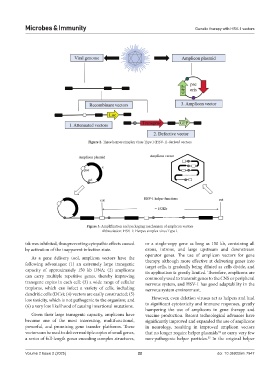
                                       Figure 2. Three herpes simplex virus Type I (HSV-1)-derived vectors


                                      Figure 3. Amplification and packaging mechanism of amplicon vectors
                                            Abbreviation: HSV-1: Herpes simplex virus Type I.

            tsk was inhibited, thus preventing cytopathic effects caused   or  a  single-copy gene as  long  as  150  kb,  containing  all
            by activation of the inapparent infection state.   exons, introns, and large upstream and downstream
                                                               operator genes. The use of amplicon vectors for gene
              As a gene delivery tool, amplicon vectors have the
            following advantages: (1) an extremely large transgenic   therapy, although more effective at delivering genes into
                                                               target cells, is gradually being diluted as cells divide, and
            capacity of approximately 150  kb DNA; (2) amplicons   its application is greatly limited. Therefore, amplicons are
            can carry multiple repetitive genes, thereby improving   commonly used to transmit genes to the CNS or peripheral
            transgene copies in each cell; (3) a wide range of cellular   nervous system, and HSV-1 has good adaptability in the
            tropisms, which can infect a variety of cells, including   nervous system environment.
            dendritic cells (DCs); (4) vectors are easily constructed; (5)
            low toxicity, which is not pathogenic to the organism; and   However, even deletion viruses act as helpers and lead
            (6) a very low likelihood of causing insertional mutations.  to significant cytotoxicity and immune responses, greatly
                                                               hampering the use of amplicons in gene therapy and
              Given their large transgenic capacity, amplicons have   vaccine production. Recent technological advances have
            become one of the most interesting, multifunctional,   significantly improved and expanded the use of amplicons
            powerful, and promising gene transfer platforms. These   in  neurology,  resulting  in  improved  amplicon vectors
            vectors can be used to deliver multiple copies of small genes,   that no longer require helper plasmids  or carry very few
                                                                                              34
            a series of full-length genes encoding complex structures,   non-pathogenic helper particles.  In the original helper
                                                                                         35
            Volume 2 Issue 2 (2025)                         22                               doi: 10.36922/mi.7947

