


Page 35 - MI-2-2
P. 35
Microbes & Immunity                                                     Genetic therapy with HSV-1 vectors


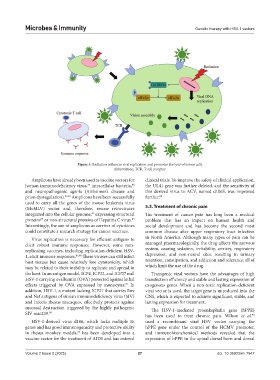
                                  Figure 5. Radiation enhances viral replication and promotes the lysis of tumor cells
                                                 Abbreviation: TCR: T cell receptor.

              Amplicons have already been used as vaccine vectors for   clinical trials. To improve the safety of clinical application,
            human immunodeficiency virus,  intracellular bacteria,    the UL41 gene was further deleted, and the sensitivity of
                                                         80
                                      79
            and neuropathogenic agents (Alzheimer’s disease and   this derived virus to ACV, named d106S, was improved
            prion dysregulation). 36,81  Amplicons have been successfully   further. 89
            used to carry all the genes of the mouse leukemia virus
            (MoMLV) vector and, therefore, rescue retroviruses   5.3. Treatment of chronic pain
            integrated into the cellular genome,  expressing structural   The treatment of cancer pain has long been a medical
                                        82
                  83
            proteins  or non-structural proteins of Hepatitis C virus.    problem that has an impact on human health and
                                                         84
            Interestingly, the use of amplicons as carriers of cytokines   social development and has become the second most
            could constitute a research strategy for cancer vaccines.  common disease after upper respiratory tract infection
              Virus replication is necessary for efficient antigens to   in North America. Although many types of pain can be
            elicit robust immune responses. However, some non-  managed pharmacologically, the drug affects the nervous
            replicating vaccines, including replication-deficient HSV-  system,  causing  sedation,  irritability,  anxiety,  respiratory
            1, elicit immune responses. 85,86  These viruses can still infect   depression,  and non-neural  sites,  resulting  in  urinary
            host tissues but cause relatively low cytotoxicity, which   retention, constipation, and addiction and tolerance, all of
            may be related to their inability to replicate and spread in   which limit the use of the drug.
            the host. In an antigen model, ICP4, ICP22, and ICP27 null   Transgenic viral vectors have the advantages of high
            HSV-1 carrying ovalbumin (OVA) protected against lethal   transfection efficiency and stable and lasting expression of
            effects triggered by OVA expressed by monocytes.  In   exogenous genes. When a non-toxic replication-deficient
                                                      87
            addition, HSV-1, a mutant lacking ICP27 that carries Env   viral vector is used, the target gene is introduced into the
            and Nef antigens of simian immunodeficiency virus (SIV)   CNS, which is expected to achieve significant, stable, and
            and infects rhesus macaques, effectively protects against   lasting expression for treatment.
            mucosal destruction triggered by  the highly pathogenic   The HSV-1-mediated proenkephalin gene  (hPPE)
            SIV mac239. 88
                                                                                                            90
                                                               has been used to treat chronic pain. Wilson  et al.
              HSV-1-derived virus d106, which lacks multiple IE   used a recombinant viral HSV vector carrying the
            genes and has good immunogenicity and protective ability   hPPE gene under the control of the HCMV promoter,
            in rhesus monkey models,  has been developed into a   and  immunohistochemical  methods  revealed  that  the
                                  27
            vaccine vector for the treatment of AIDS and has entered   expression of hPPE in the spinal dorsal horn and dorsal

            Volume 2 Issue 2 (2025)                         27                               doi: 10.36922/mi.7947

