


Page 14 - MI-2-3
P. 14
Microbes & Immunity                                                PTMs in Sepsis: Mechanisms and therapy


            enhancing  lipopolysaccharide-induced  macrophage  profoundly impacts disease progression, suggesting that
            inflammation.  Conversely, ginkgolic acid inhibits   targeting UBC9 and SENP1 may offer novel sepsis treatments.
                       91
            SUMOyation, promoting NF-κB p65 phosphorylation and
            nuclear translocation, increasing the release of macrophage   6. Acetylation and sepsis
            inflammatory factors and apoptosis, thereby exacerbating   Acetylation, a PTM catalyzed by acetyltransferase,
            sepsis-induced organ damage. 92                    modulates gene expression and participates in cellular
              In summary, SUMOylation exerts an anti-inflammatory   processes, including gene transcription and signal
                                                                          5
            and protective role in sepsis by stabilizing IκBα to inhibit   transduction.   Aberrant  acetylation within  the  TLR4
            NF-κB signaling, regulating macrophage polarization,   signaling complex is implicated in dysregulated immune
            inflammatory responses, and cell apoptosis. The dynamic   responses, suggesting acetylation as a potential therapeutic
            balance of the core regulatory nodes UBC9 and SENP1   target in sepsis. 93

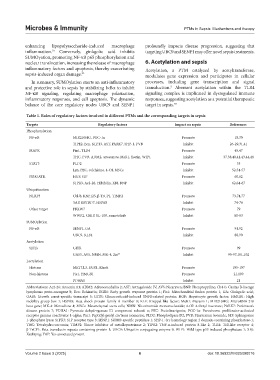
            Table 1. Roles of regulatory factors involved in different PTMs and the corresponding targets in sepsis
            Targets                        Regulatory factors              Impact on sepsis        References
            Phosphorylation
             NF-κB              MIR210HG, PGC-1α                              Promote                18,30
                                TIPE2, Ecn, KLF13, AST, PARK7, SHP-1, PVB      Inhibit             26-29,31,41
             MAPK               Pin1, TLR4                                    Promote                45,47
                                THC, PVB, ADM2, artesunate, MaR1, fisetin, WIP1  Inhibit        37,38,40,41,43,44,48
             STAT3              PLD2                                          Promote                 53
                                Lyn, PEC, colchicine, 4-OI, MSCs               Inhibit              52,54-57
             PI3K/ATK           HGF, S1P                                      Promote                60,62
                                S1PR3, Ac2-26, Hibifolin, XBJ, BNP             Inhibit              62,64-67
            Ubiquitination
             NLRP3              Cbl-b, RNF125, β-TrCP1, TIMP2                 Promote               73,74,77
                                YAP, KBTBD7, HSPA8                             Inhibit               74-76
             Other target       FBXW7                                         Promote                 79
                                WWP2, CHIP, YL-109, samotolisib                Inhibit               80-83
            SUMOylation
             NF-κB              SENP1, GA                                     Promote                91,92
                                UBC9, KLF4                                     Inhibit               88,90
            Acetylation
             SIRTs              GITR                                          Promote                 99
                                GAS5, AVS, NMN, MK-4, Zn 2+                    Inhibit            95-97,101,102
            Lactylation
             Histone            METTL3, EGR1, RhoA                            Promote               105-107
             Non-histone        Fis1, HMGB1                                   Promote               21,109
                                PDHA1                                          Inhibit                21
            Abbreviations: Ac2-26: Annexin A1; ADM2: Adrenomedullin 2; AST: Astragaloside IV; AVS: Nicaraven; BNP: Phenpropylline; Cb1-b: Casitas B-lineage
            lymphoma  proto-oncogene  b;  Ecn:  Echinatin;  EGR1:  Early  growth  response  protein  1;  Fis1:  Mitochondrial  fission  protein  1;  GA:  Ginkgolic  acid;
            GAS5: Growth arrest-specific transcript 5; GITR: Glucocorticoid-induced TNFR-related protein; HGF: Hepatocyte growth factor; HMGB1: High
            mobility group box 1; HSPA8: Heat shock protein family A member 8; KLF: Kruppel-like factor; MaR1: Maresin-1; MIR210HG: MicroRNA-210
            host gene; MK-4: Menadione 4; MSCs: Mesenchymal stem cells; NMN: Nicotinamide mononucleotide; 4-OI: 4-Octyl itaconate; PARK7: Parkinson’s
            disease protein 7; PDHA1: Pyruvate dehydrogenase E1 component subunit α; PEC: Pectolinarigenin; PGC-1α: Peroxisome proliferator-activated
            receptor gamma coactivator 1-alpha; Pin1: Peptidyl-prolyl cis/trans isomerase; PLD2: Phospholipase D2; PVB: Pinaverium bromide; S1P: Sphingosine
            1-phosphate lyase; S1PR3: S1P receptor type 3; SENP1: SUMO-specific peptidase 1; SHP-1: Src homology region 2 domain-containing phosphatase-1;
            THC: Tetrahydrocurcumin; TIMP2: Tissue inhibitor of metalloproteinase 2; TIPE2: TNF-α-induced protein 8-like 2; TLR4: Toll-like receptor 4;
            β-TrCP1: Beta-transducin repeats-containing protein 1; UBC9: Ubiquitin-conjugating enzyme 9; WIP1: Wild-type p53-induced phosphatase 1; XBJ:
            Xuebijing; YAP: Yes-associated protein.


            Volume 2 Issue 3 (2025)                         6                            doi: 10.36922/MI025090016

