


Page 15 - MI-2-3
P. 15
Microbes & Immunity                                                PTMs in Sepsis: Mechanisms and therapy


              Sirtuins (SIRTs), a family of nicotinamide adenine   degradation by  recruiting E3  ligase  MARCH7,  reducing
            dinucleotide (NAD)-dependent deacetylases (SIRT1-7),   NLRP3 ubiquitination but increasing its acetylation,
            exhibit antioxidant, anti-apoptotic, and anti-inflammatory   thereby exacerbating macrophage pyroptosis, and
            properties, positioning them as key regulators in sepsis.    systemic inflammatory injury.  SIRT3, localized in the
                                                         94
                                                                                        99
            Specifically, SIRT1 activation, mediated by growth   mitochondrial matrix,  mitigates oxidative  stress and
                                                                                 100
            arrest-specific transcript 5 (GAS5), nicaraven (AVS),   inflammation in sepsis-induced ALI by inhibiting p53
            and nicotinamide mononucleotide  (NMN),  attenuates   acetylation, an effect enhanced by menadione 4 (MK-4).
                                                                                                            101
            inflammation by inhibiting high mobility group box   SIRT7 (the only sirtuin located in the nucleolus) is required
            1 (HMGB1) and NF-κB p65 acetylation, respectively,   for ribosomal DNA transcription.  SIRT7 inactivation
                                                                                           100
            thereby improving survival and mitigating organ damage   by Zn  increases parkin acetylation, promoting parkin-
                                                                    2+
            in sepsis models. 95-97  NMN also inhibits NF-κB p65   mediated mitophagy and inhibiting NLRP3 activation,
            phosphorylation, thereby preventing sepsis-induced ALI. 97  thus ameliorating AKI in sepsis. 102
              SIRT2  is  a  negative  regulatory  factor  of  autophagy.   SIRTs and acetylation critically regulate inflammation
            Its  inhibition  promotes  autophagy  and  attenuates   and sepsis progression, making them promising
            septic AKI through increasing FOXO1 acetylation.    therapeutic targets. Molecules such as GAS5, AVS, NMN,
                                                         98
            Furthermore, the costimulatory molecule glucocorticoid-  GITR, MK-4, and Zn  may offer avenues for targeted
                                                                                 2+
            induced TNFR-related protein (GITR) induces SIRT2   intervention.


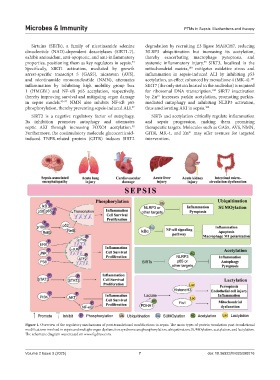
            Figure 1. Overview of the regulatory mechanisms of post-translational modifications in sepsis. The main types of protein translation post-translational
            modifications involved in sepsis and multiple organ dysfunction syndrome are phosphorylation, ubiquitination, SUMOylation, acetylation, and lactylation.
            The schematic diagram was created on www.figdraw.com.


            Volume 2 Issue 3 (2025)                         7                            doi: 10.36922/MI025090016

