


Page 144 - MI-2-3
P. 144
Microbes & Immunity                                                   Characterizing low-grade CNS tumors


             A                     B                     C                      D


             E                    F                    G
                                                                               K


             H                    I                    J


                                                                              O
             L                     M                     N


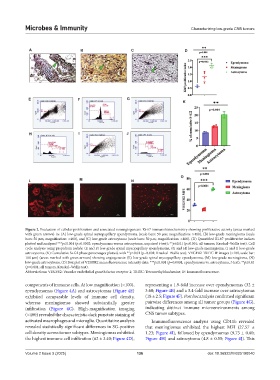
            Figure 2. Evaluation of cellular proliferation and associated neoangiogenesis. Ki-67 immunohistochemistry showing proliferative activity (areas marked
            with green arrows) in: (A) low-grade spinal myxopapillary ependymoma (scale bars: 50 µm; magnification: ×400), (B) low-grade meningioma (scale
            bars: 50 µm; magnification: ×400), and (C) low-grade astrocytoma (scale bars: 50 µm; magnification: ×400). (D) Quantified Ki-67 proliferative indices
            plotted and analyzed ***p≤0.001 (p=0.0002; ependymoma versus astrocytoma, unpaired t-test); **p≤0.01 (p=0.001; all tumors, Kruskal–Wallis test). Cell
            cycle analysis using propidium iodide: (E and F) low-grade spinal myxopapillary ependymoma, (G and H) low-grade meningioma, (I and J) low-grade
            astrocytoma. (K) Cumulative S+G2 phase percentages plotted, with **p≤0.01 (p=0.001; Kruskal–Wallis test). VEGFR2-TRITC IF images (×100, scale bar:
            100 µm) (areas marked with green arrows) showing angiogenesis: (L) low-grade spinal myxopapillary ependymoma, (M) low-grade meningioma, (N)
            low-grade astrocytoma. (O) Box plot of VEGFR2 mean fluorescence intensity data: ***p≤0.001 (p=0.0001; ependymoma vs. astrocytoma, t-test); **p≤0.01
            (p=0.001; all tumors, Kruskal–Wallis test).
            Abbreviations: VEGFR2: Vascular endothelial growth factor receptor 2; TRITC: Tetramethylrhodamine; IF: Immunofluorescence.

            components of immune cells. At low magnification (×100),   representing a 1.9-fold increase over ependymomas (32 ±
            ependymomas (Figure 4A) and astrocytomas (Figure 4E)   3.60; Figure 4B) and a 3.4-fold increase over astrocytomas
            exhibited comparable levels of immune cell density,   (18 ± 2.5; Figure 4F). Post hoc analysis confirmed significant
            whereas  meningiomas  showed substantially greater   pairwise differences among all tumor groups (Figure 4G),
            infiltration (Figure  4C). High-magnification imaging   indicating distinct immune microenvironments among
            (×400) revealed the characteristic dark punctate staining of   CNS tumor subtypes.
            activated macrophages and microglia. Quantitative analysis   Immunofluorescence analysis using CD11b revealed
            revealed statistically significant differences in SG-positive   that meningiomas exhibited the highest MFI  (27.57 ±
            cell density across tumor subtypes. Meningiomas exhibited   1.23; Figure 4I), followed by ependymomas (9.73 ± 0.60;
            the highest immune cell infiltration (62 ± 3.40; Figure 4D),   Figure 4H) and astrocytoma (4.8 ± 0.55; Figure 4J). This


            Volume 2 Issue 3 (2025)                        136                           doi: 10.36922/MI025190040

