


Page 157 - MI-2-3
P. 157
Microbes & Immunity                                                             Hyphae and healthspan


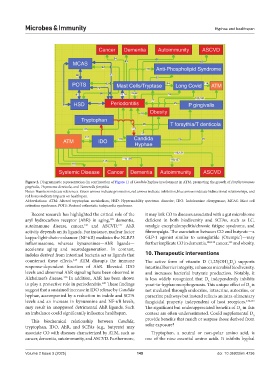
            Figure 2. Diagrammatic representation (in continuation of Figure 1) of Candida hyphae involvement in ATM, promoting the growth of Porphyromonas
            gingivalis, Treponema denticola, and Tannerella forsythia
            Notes: Numbers indicate references. Green arrows indicate promotion, red arrows indicate inhibition, blue arrows indicate bidirectional relationships, and
            red boxes indicate impacts on healthspan.
            Abbreviations: ATM: Altered tryptophan metabolism; HSD: Hypermobility spectrum disorder; IDO: Indoleamine dioxygenase; MCAS: Mast cell
            activation syndrome; POTS: Postural orthostatic tachycardia syndrome.
              Recent research has highlighted the critical role of the   it may link CO to diseases associated with a gut microbiome
            aryl hydrocarbon receptor (AhR) in aging,  dementia,   deficient in both biodiversity and SCFAs, such as LC,
                                                125
            autoimmune disease, cancer,  and ASCVD.  AhR       myalgic encephalomyelitis/chronic fatigue syndrome, and
                                                   127
                                     126
            activity depends on its ligands. For instance, nuclear factor   fibromyalgia. The association between CO and butyrate—a
            kappa-light-chain-enhancer (NF-κB) mediates the NLRP3   GLP-1 agonist similar to semaglutide (Ozempic )—may
                                                                                                       ®
            inflammasome, whereas kynurenines—AhR ligands—     further implicate CO in dementia, 129,130  cancer,  and obesity.
                                                                                                  131
            accelerate aging and neurodegeneration. In contrast,
            indoles derived from intestinal bacteria act as ligands that   10. Therapeutic interventions
            counteract these effects.  ATM disrupts the immune   The active form of vitamin D (1,25(OH) D ) supports
                                125
                                                                                                    3
                                                                                                  2
            response-dependent function of AhR.  Elevated IDO   intestinal barrier integrity, enhances microbial biodiversity,
            levels and abnormal AhR signaling have been observed in   and increases bacterial butyrate production. Notably, it
            Alzheimer’s disease.  In addition, AhR has been shown   is less widely recognized that D  independently inhibits
                            120
                                                                                          3
            to play a protective role in periodontitis.  These findings   yeast-to-hyphae morphogenesis. This unique effect of D  is
                                            128
                                                                                                           3
            suggest that a sustained increase in IDO release by Candida   not mediated through endocrine, intracrine, autocrine, or
            hyphae, accompanied by a reduction in indole and SCFA   paracrine pathways but instead reflects an intra-alimentary
            levels and an increase in kynurenine and NF-κB levels,   fungicidal property independent of host receptors. 132,133
            may result in unopposed detrimental AhR ligands. Such   The significant but underappreciated benefits of D  in this
                                                                                                       3
            an imbalance could significantly influence healthspan.  context are often underestimated. Could supplemental D
                                                                                                             3
              This biochemical relationship between  Candida,   provide benefits that match or surpass those derived from
            tryptophan, IDO, AhR, and SCFAs (e.g., butyrate) may   solar exposure?
            associate CO with diseases characterized by ATM, such as   Tryptophan,  a  neutral  or  non-polar  amino  acid,  is
            cancer, dementia, autoimmunity, and ASCVD. Furthermore,   one of the nine essential amino acids. It inhibits hyphal
            Volume 2 Issue 3 (2025)                        149                               doi: 10.36922/mi.4736

