


Page 179 - MI-2-3
P. 179
Microbes & Immunity A novel anti-EphB2 monoclonal antibody for flow cytometry
A CHO/EphB3 at a concentration of 1 μg/mL (Figure S1).
In contrast, Eb Mab-1, 2, 4, 7, and 12 were recognized as
2
specific to CHO/EphB2, with no cross-reactivity observed
even at 10 μg/mL. Conversely, Eb Mab-3 demonstrated
2
cross-reactivity to EphA3, EphB1, and EphB3. In
addition, Eb Mab-8 and 10 also showed cross-reactivity
2
to EphB3 (Figures S2-4 and Table 1). Flow cytometry
B was subsequently conducted using the Eb Mabs and
2
2H9 against CHO/EphB2, CHO-K1, LN229/EphB2,
and LN229 cells. Dose-dependent recognition of CHO/
EphB2 cells was observed for the Eb Mabs at concentrations
2
of 10, 1, 0.1, and 0.01 μg/mL (Figure S5). Among the
EphB2-specific Eb Mabs (Eb Mab-1, 2, 4, 7, and 12),
2
2
C Eb Mab-12 showed the high reactivity (Figure 2A). Dose-
2
dependent recognition of CHO/EphB2 cells was also noted
for 2H9 at concentrations of 10, 1, 0.1, and 0.01 μg/mL;
however, this was less effective compared to Eb Mab-12
2
(Figure 2A). Parental CHO-K1 cells were not recognized
even at a concentration of 10 μg/mL for either Eb Mab-12
2
and 2H9 (Figure 2B). The superior reactivity of Eb Mab-12
2
compared to 2H9 was also observed in LN229/EphB2 and
D LN229 cells (Figure S6). Weak expression of endogenous
EphB2 in LN229 had been previously confirmed through
quantitative PCR and western blot analyses. 44
The reactivity of Eb Mabs and 2H9 against an
2
endogenous EphB2-expressing colorectal cancer cell line,
45
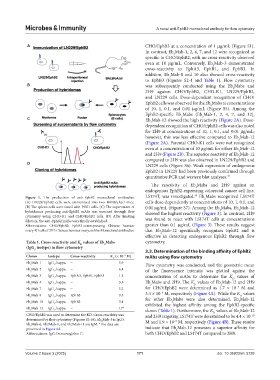
Figure 1. The production of anti-EphB2 monoclonal antibodies. LS174T, was investigated. Eb Mabs recognized LS174T
2
(A) LN229/EphB2 cells were immunized into two BALB/cAJcl mice. cells dose-dependently at concentrations of 10, 1, 0.1, and
(B) The spleen cells were fused with P3U1 cells. (C) The supernatant of 0.01 μg/mL (Figure S7). Among the Eb Mabs, Eb Mab-12
2
2
hybridomas producing anti-EphB2 mAbs was screened through flow showed the highest reactivity (Figure 3). In contrast, 2H9
cytometry using CHO-K1 and CHO/EphB2 cells. (D) After limiting
dilution, the anti-EphB2 mAbs were finally established. was found to react with LS174T cells at concentrations
Abbreviations: CHO/EphB2: EphB2-overexpressing Chinese hamster greater than 0.1 μg/mL (Figure 3). These results suggest
ovary-K1 cells; CHO: Chinese hamster ovary; mAbs: Monoclonal antibodies. that Eb Mab-12 specifically recognizes EphB2 and is
2
effective in detecting endogenous EphB2 through flow
Table 1. Cross‑reactivity and K values of Eb Mabs cytometry.
2
D
(IgG isotype) in flow cytometry 3.3. Determination of the binding affinity of EphB2
1
Clones Isotype Cross‑reactivity K (× 10 M) mAbs using flow cytometry
−9
D
Eb Mab-1 IgG , kappa − 5.9 Flow cytometry was conducted, and the geometric mean
2
1
Eb Mab-2 IgG , kappa − 6.4 of the fluorescence intensity was plotted against the
2
1
Eb Mab-3 IgG , kappa EphA3, EphB1, EphB3 1.1 concentration of mAbs to determine the K values of
2 1 D
Eb Mab-4 IgG , kappa − 3.3 Eb Mabs and 2H9. The K values of Eb Mab-12 and 2H9
2 1 2 D 2
−9
Eb Mab-7 IgG , kappa − 5.2 for CHO/EphB2 were determined as 1.7 × 10 M and
2 1
−9
Eb Mab-8 IgG , kappa EphB3 9.5 3.4 × 10 M, respectively (Figure 4A). While the K values
D
2 1 for other Eb Mabs were also determined, Eb Mab-12
Eb Mab-10 IgG , kappa EphB3 3.4 exhibited the highest affinity among the EphB2-specific
2
2
1
2
Eb Mab-12 IgG , kappa − 1.7* clones (Table 1). Furthermore, the K values of Eb Mab-12
1
2
D
2
CHO/EphB2 was used to determine the KD. Cross-reactivity was and 2H9 targeting LS174T were determined to be 4.4 × 10
−10
determined by flow cytometry (Figures S2-S4). Eb Mab-5 is IgG3. M and 1.9 × 10 M, respectively (Figure 4B). These results
−9
2
Eb Mab-6, Eb2Mab-9, and Eb2Mab-11 are IgM. *The data are
2
presented in Figure 4A. indicate that Eb Mab-12 possesses a superior affinity for
2
Abbreviations: IgG: Immunoglobin G. both CHO/EphB2 and LS174T compared to 2H9.
Volume 2 Issue 3 (2025) 171 doi: 10.36922/mi.5728

