


Page 40 - MI-2-3
P. 40
Microbes & Immunity                                             Probiotics from ancient wisdom to modern days


                                                                  pollutants in water, air, and soil, helping in the
                                                                  degradation of pollutants, such as hydrocarbons,
                                                                  heavy metals, and synthetic dyes.
                                                               •   Food industry: Microorganisms are used in the
                                                                  production of fermented foods and beverages, which
                                                                  offer various health benefits. They are involved in
                                                                  the fermentation of dairy and non‐dairy products,
                                                                  enhancing flavor, texture, and nutritional value.
                                                               •   Probiotics and health: Probiotics, which are beneficial
                                                                  microorganisms, play a significant role in maintaining
                                                                  gut health and overall well‐being. They can help
                                                                  in restoring healthy microbiome communities and
                                                                  preventing infections.
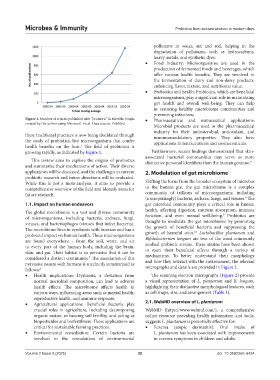
            Figure 1. Number of articles published with “probiotic” in the title. Graph   •   Pharmaceutical and nutraceutical applications:
            created by the author using Microsoft Excel. Data source: PubMed.
                                                                  Microbial products are used in the pharmaceutical
                                                                  industry for their antimicrobial, antioxidant, and
            these traditional practices is now being elucidated through   immunomodulatory properties. They also have
            the study of probiotics, live microorganisms that confer   applications in nutraceuticals and cosmeceuticals.
                                   1
            health benefits on the host.  The field of probiotics is
            growing rapidly, as indicated by Figure 1.           Furthermore, recent findings demonstrated that skin-
                                                               associated bacterial communities may serve as more
              This review aims to explore the origins of probiotics   distinctive personal identifiers than the human genome. 7
            and summarize their mechanisms of action. Their diverse
            applications will be discussed, and the challenges in current   2. Modulation of gut microbiome
            probiotic research and future directions will be evaluated.
            While this is not a meta-analysis, it aims to provide a   Shifting the focus from the broader ecosystem of microbes
            comprehensive overview of the field and identify areas for   to the human gut, the gut microbiome is a complex
            future research.                                   community of trillions of microorganisms, including
                                                               (unsurprisingly) bacteria, archaea, fungi, and viruses.  The
                                                                                                         8
            1.1. Impact on human endeavors                     gut microbial community plays a critical role in human
                                                               health,  affecting  digestion,  nutrient  absorption,  immune
            The global microbiome is a vast and diverse community                               9
            of microorganisms, including bacteria, archaea, fungi,   function, and even mental well-being.  Probiotics are
            viruses, and bacteriophages (viruses that infect bacteria).   thought to modulate the gut microbiome by promoting
            The microbiome lives in symbiosis with humans and has a   the growth of beneficial bacteria and suppressing the
                                                                                    10
            profound impact on human health. These microorganisms   growth of harmful ones.   Lactobacillus plantarum and
            are found everywhere – from the soil, water, and air   Bifidobacterium longum  are  two  of  the  most  commonly
            to every part of the human body, including the brain,   studied probiotic strains. These strains have been shown
                                                               to  exert  their  beneficial effects  through  a variety of
            skin, and gut. Their habitat is so pervasive that it can be
            considered a distinct community.  The association of this   mechanisms.  To  better  understand  their  morphology
                                       5
            pervasive nature with humans is succinctly summarized as   and how they interact with the environment, the relevant
            follows: 6                                         micrographs and details are provided in Figure 2.
            •   Health implications: Dysbiosis, a deviation from   The scanning electron micrographs (Figure 2) provide
               normal microbial composition, can lead to adverse   a visual representation of  L. plantarum and  B. longum,
               health effects.  The  microbiome  affects  health  in   highlighting their distinctive morphological features, such
               various ways, influencing areas such as mental health,   as cell shape, size, and arrangement (Table 1).
               reproductive health, and immune response.
            •   Agricultural applications: Beneficial bacteria play   2.1. WebMD overview of L. plantarum
               crucial roles in agriculture, including decomposing   WebMD (https://www.webmd.com/), a comprehensive
               organic matter, enhancing soil fertility, and acting as   online resource providing health information and tools,
               biopesticides and biofertilizers. These applications are   suggests L. plantarum is potentially effective for:
               critical for sustainable farming practices.     •   Eczema  (atopic  dermatitis):  Oral  intake  of
            •   Environmental remediation: Certain bacteria are   L. plantarum has been associated with improvements
               involved in the remediation of environmental       in eczema symptoms in children and adults.


            Volume 2 Issue 3 (2025)                         32                               doi: 10.36922/mi.6424

