


Page 11 - MI-2-4
P. 11
Microbes & Immunity                                        Regulation of Staphylococcus aureus CP biosynthesis


                         A


                         B


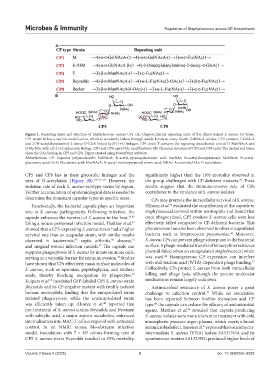
            Figure 1. Repeating units and structure of Staphylococcus aureus CPs. (A) Oligosaccharide repeating units of five characterized S. aureus CP types.
            CP1 strain M has a taurine modification, which is covalently linked through amide bonds to every fourth GalNAcA residue. CP2 contains GlcNAcA
            and 2-(N-acetylalanylamino)-2-deoxy-D-GlcA linked by β-(1→4) linkages. CP4 strain T contains the repeating disaccharide unit of D-ManNAcA and
            D-FucNAc with a β-(1→3) glycosidic linkage. CP5 and CP8 carry OAc modifications. (B) Chemical structure of CP5 and CP8 units. The dashed red boxes
            show the OAc linking in CP5 and CP8. Figure created using PowerPoint software.
            Abbreviations: CP: Capsular polysaccharide; GalNAcA: N-acetyl-pyranogalactosylic acid; FucNAc: N-acetyl-fucopyranosyl; GlcNAcA: N-acetyl-
            glucuronic acid; GlcA: Glucuronic acid; ManNAcA: N-acetyl-mannopyranosyl uronic acid; NHAc: Acetamido; OAc: O-acetylation.


            CP5 and CP8  lies in  their glycosidic  linkages  and the   significantly higher than the 18% mortality observed in
            sites of O-acetylation (Figure  1B). 10,14,17,31  However, the   the group challenged with CP-deficient mutants.  These
                                                                                                       36
            isolation rate of each S. aureus serotype varies by region.   results  suggest  that  the  immune-evasive  role  of  CPs
            Further accumulation of epidemiological data is needed to   contributes to the virulence of S. aureus isolates.
            determine the dominant capsular types in specific areas.  CPs may promote the intracellular survival of S. aureus.
              Functionally, the bacterial capsule plays an important   Nilsson et al.  evaluated the contribution of the capsule to
                                                                         36
            role  in  S. aureus  pathogenicity.  Following  infection,  the   staphylococcal survival within neutrophils and found that
            capsule enhances the survival of S. aureus in the host. 32,33    once phagocytized, CP5-positive S. aureus cells were less
            Using a mouse peritoneal infection model, Thakker et al.    effectively killed compared to CP-deficient bacteria. This
                                                         34
            showed that a CP5-expressing S. aureus strain had a higher   phenomenon has also been observed in other encapsulated
                                                                                                   41
            survival rate than an acapsular strain, with similar results   bacteria such as  Streptococcus pneumoniae.  Moreover,
            observed  in  bacteremia,   septic  arthritis,   abscess,    S. aureus CPs can prevent phage adsorption to the bacterial
                                                         15
                                                36
                                 35
            and surgical wound infection models.  The capsule can   surface. A phage-mediated transfer of tetracycline resistance
                                           37
            suppress phagocytosis of S. aureus by innate immune cells,   plasmid failed when an encapsulated staphylococcal strain
                                                                       42
            serving as a versatile barrier for immune evasion.  Studies   was used.  Homogeneous CP expression can interfere
                                                   38
                                                                                                            43
            have shown that CPs effectively mask surface molecules of   with wall teichoic acid (WTA)-dependent phage binding.
            S. aureus, such as opsonins, peptidoglycan, and teichoic   Collectively, CPs protect S. aureus from both intracellular
            acids, thereby blocking recognition by phagocytes.    killing and phage lysis, although the precise molecular
                                                         39
            Kuipers et al.  incubated GFP-labeled CP5 S. aureus strain   mechanisms remain largely unknown.
                      38
            Reynolds and its CP-negative mutant with freshly isolated   Antimicrobial resistance of  S. aureus  poses  a great
            human neutrophils, finding that the encapsulated strain   challenge to infection control.  While no association
                                                                                         44
            resisted  phagocytosis,  while  the  unencapsulated  strain   has been reported between biofilm formation and CP
            was efficiently taken up. Alvarez  et al.  reported that   type,  the capsule can reduce the efficacy of antimicrobial
                                             40
                                                                   45
            pre-treatment of S. aureus strains Reynolds and Newman   agents.  Matthes  et al.   revealed  that  capsule-producing
                                                                                 46
            with salicylic acid, a major aspirin metabolite, enhanced   S. aureus isolates were more tolerant to treatment with cold
            internalization into MAC-T cells compared with untreated   atmospheric pressure argon plasma, which exerts a broad
            control. In an NMRI mouse bloodstream infection    antimicrobial effect. Jansen et al.  reported that vancomycin-
                                                                                       47
                                      6
            model, inoculation with 7 × 10  colony-forming unit of   intermediate S. aureus (VISA) isolate SA137/93A and its
            CP5 S. aureus strain Reynolds resulted in 55% mortality,   spontaneous-mutant SA137/93G produced higher levels of
            Volume 2 Issue 4 (2025)                         3                                doi: 10.36922/mi.8392

