


Page 38 - MSAM-3-3
P. 38
Materials Science in Additive Manufacturing                           3D-printed LMPA-integrated soft robots


                         A                                   B


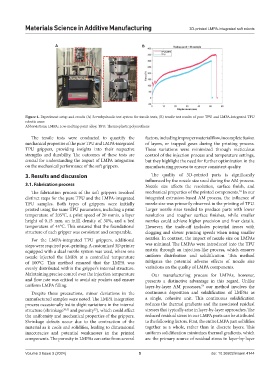
            Figure 4. Experiment setup and results (A) Servohydraulic test system for tensile tests; (B) tensile test results of pure TPU and LMPA-integrated TPU
            robotic arms
            Abbreviations: LMPA: Low-melting-point alloy; TPU: Thermoplastic polyurethane

              The tensile tests were conducted to quantify the   factors, including improper material flow, incomplete fusion
            mechanical properties of the pure TPU and LMPA-integrated   of layers, or trapped gases during the printing process.
            TPU grippers, providing insights into their respective   These variations were minimized through meticulous
            strengths and durability. The outcomes of these tests are   control of the injection process and temperature settings,
            crucial for understanding the impact of LMPA integration   but they highlight the need for further optimization in the
            on the mechanical performance of the soft grippers.  manufacturing process to ensure consistent quality.

            3. Results and discussion                            The quality of 3D-printed parts is significantly
                                                               influenced by the nozzle size used during the AM process.
            3.1. Fabrication process                           Nozzle size affects the resolution, surface finish, and
                                                                                                       53
              The fabrication process of the soft grippers involved   mechanical properties of the printed components.  In our
            distinct steps for the pure TPU and the LMPA-integrated   integrated extrusion-based AM process, the influence of
            TPU samples. Both types of grippers were initially   nozzle size was primarily observed in the printing of TPU.
            printed using the same TPU parameters, including a print   Larger nozzle sizes tended to produce parts with lower
            temperature of 205°C, a print speed of 20 mm/s, a layer   resolution and rougher surface finishes, while smaller
            height of 0.15  mm, an infill density of 30%, and a bed   nozzles could achieve higher precision and finer details.
            temperature of 45°C. This ensured that the foundational   However, the trade-off includes potential issues with
            structure of each gripper was consistent and comparable.  clogging and slower printing speeds when using smaller
              For the LMPA-integrated TPU grippers, additional   nozzles. In contrast, the impact of nozzle size on LMPAs
            steps were required post-printing. A customized 3D printer   was minimal. The LMPAs were introduced into the TPU
            equipped with a dual nozzle system was used, where one   matrix through an injection-like process, which ensures
            nozzle  injected  the  LMPA  at  a  controlled  temperature   uniform distribution and solidification. This method
            of 100°C. This method ensured that the LMPA was    mitigates the potential adverse effects of nozzle size
            evenly distributed within the gripper’s internal structure.   variations on the quality of LMPA components.
            Maintaining precise control over the injection temperature   Our manufacturing process for LMPAs, however,
            and flow rate was critical to avoid air pockets and ensure   presents a distinctive advantage in this regard. Unlike
            uniform LMPA filling.                              layer-by-layer AM processes,  our method involves  the
                                                                                       54
              Despite  these  precautions, minor deviations  in the   continuous deposition and solidification of LMPAs as
            manufactured samples were noted. The LMPA integration   a single, cohesive unit. This continuous solidification
            process occasionally led to slight variations in the internal   reduces the thermal gradients and the associated residual
            structure (shrinkage 50,51  and porosity ), which could affect   stresses that typically arise in layer-by-layer approaches. The
                                         52
            the uniformity and mechanical properties of the grippers.   reduced residual stress in our LMPA parts can be attributed
            Shrinkage defects occur due to the contraction of the   to the following factors. First, the entire LMPA part solidifies
            material as it cools and solidifies, leading to dimensional   together as a whole, rather than in discrete layers. This
            inaccuracies  and  potential weaknesses in  the printed   uniform solidification minimizes thermal gradients, which
            components. The porosity in LMPAs can arise from several   are the primary source of residual stress in layer-by-layer


            Volume 3 Issue 3 (2024)                         5                              doi: 10.36922/msam.4144

