


Page 97 - MSAM-3-3
P. 97
Materials Science in Additive Manufacturing                     Wide-angle broadband MMA with CB-CIP/PLA


                         A                      B                        C


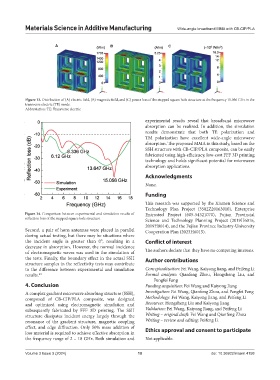
            Figure 13. Distribution of (A) electric field, (B) magnetic field, and (C) power loss of the stepped square hole structure at the frequency 15.056 GHz in the
            transverse electric (TE) mode.
            Abbreviation: TE: Transverse electric

                                                               experimental results reveal that broadband microwave
                                                               absorption can be realized. In addition, the simulation
                                                               results demonstrate that both TE polarization and
                                                               TM polarization have excellent wide-angle microwave
                                                               absorption. The proposed MMA in this study, based on the
                                                               SSH structure with CB-CIP/PLA composite, can be easily
                                                               fabricated using high-efficiency, low-cost FFF 3D printing
                                                               technology and holds significant potential for microwave
                                                               absorption applications.

                                                               Acknowledgments
                                                               None.

                                                               Funding
                                                               This research was supported by the Xiamen Science and
                                                               Technology Plan Project (3502Z20163010),  Enterprise
            Figure 14. Comparison between experimental and simulation results of   Entrusted Project (605-54321070), Fujian Provincial
            reflection loss of the stepped square hole structure  Science and Technology Planning Project (2019H6016,
                                                               2019H0014), and the Fujian Province Industry-University
            Second, a pair of horn antennas were placed in parallel   Cooperation Plan (2023H6015).
            during actual testing, but there may be situations where
            the incident angle is greater than 0°, resulting in a   Conflict of interest
            decrease in absorption. However, the normal incidence
            of electromagnetic waves was used in the simulation of   The authors declare that they have no competing interests.
            the tests. Finally, the boundary effect in the actual SSH   Author contributions
            structure samples in the reflectivity tests may contribute
            to the difference between experimental and simulation   Conceptualization: Fei Wang, Kaiyong Jiang, and Peifeng Li
            results. 33                                        Formal analysis: Qianfeng Zhou, Hongsheng Liu, and
                                                                  Pengfei Fang
            4. Conclusion                                      Funding acquisition: Fei Wang and Kaiyong Jiang
            A complex gradient microwave absorbing structure (SSH),   Investigation: Fei Wang, Qianfeng Zhou, and Pengfei Fang
            composed of CB-CIP/PLA composite, was designed     Methodology: Fei Wang, Kaiyong Jiang, and Peifeng Li
            and optimized using electromagnetic simulation and   Resources: Hongsheng Liu and Kaiyong Jiang
            subsequently fabricated by FFF 3D printing. The SSH   Validation: Fei Wang, Kaiyong Jiang, and Peifeng Li
            structure dissipates incident energy largely through the   Writing – original draft: Fei Wang and Qianfeng Zhou
            resonance of the gradient structure, magnetic coupling   Writing – review and editing: Peifeng Li
            effect, and edge diffraction. Only 50% mass addition of   Ethics approval and consent to participate
            loss material is required to achieve effective absorption in
            the frequency range of 2 – 18 GHz. Both simulation and   Not applicable.


            Volume 3 Issue 3 (2024)                         10                             doi: 10.36922/msam.4158

