


Page 41 - OR-1-2
P. 41
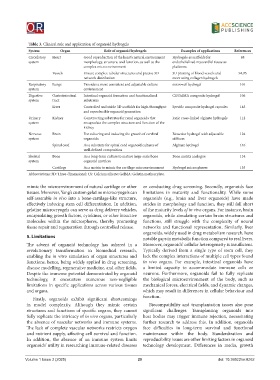
Table 3. Clinical role and application of organoid hydrogels
             System        Organ             Role of organoid hydrogels       Examples of applications  References
             Circulatory   Heart     Good reproduction of the heart’s natural environment   Hydrogels as scaffolds for   88
             system                  morphology, structure, and function, as well as the   endothelialized myocardial tissue as
                                     complex microenvironment             platforms
                       Vessels       Ensure complex tubular structures and precise 3D   3D printing of blood vessels and   94,95
                                     network distribution                 more using collagen hydrogels
             Respiratory   Lungs     Provides a more consistent and adjustable culture   microwell hydrogel  104
             system                  environment
             Digestive   Gastrointestinal   Intestinal organoid formation and functionalized   CS/GelMA composite hydrogel  106
             system    tract         substrates
                       Liver         Controlled and stable 3D scaffolds for high-throughput   Specific composite hydrogel capsules  145
                                     and reproducible organoid generation
             Urinary   Kidney        Constructing substrates for renal organoids that   Ionic cross-linked alginate hydrogels  112
             system                  encapsulate the complex structure and function of the
                                     kidney
             Nervous   Brain         For culturing and inducing the growth of cerebral   Bioactive hydrogel with adjustable   124
             system                  organoids                            stiffness
                       Spinal cord   As a substrate for spinal cord organoid cultures of   Alginate hydrogel  146
                                     well-defined composition
             Skeletal   Bone         As a long-term culture to mature large-scale bone   Bone matrix analogue  134
             system                  organoid matrices
                       Cartilage     As a matrix to mimic the cartilage microenvironment  Hydrogel microspheres  135
             Abbreviations: 3D: Three-dimensional; CS: Calcium silicate; GelMA: Gelatin methacrylate.

            mimic the microenvironment of natural cartilage or other   or conducting drug screening. Secondly, organoids face
            tissues. Moreover, Yang’s custom gelatine microcryogels can   limitations in maturity and functionality. While some
            self-assemble  in vivo into a bone-cartilage-like structure,   organoids (e.g., brain and liver organoids) have made
            effectively inducing stem cell differentiation. In addition,   strides in morphology and function, they still fall short
            gelatine microcryogels can serve as drug delivery vehicles,   of the maturity levels of in vivo organs. For instance, brain
            encapsulating growth factors, cytokines, or other bioactive   organoids, while simulating certain brain structures and
            molecules within the microspheres, thereby promoting   functions, still struggle with the complexity of neural
            tissue repair and regeneration through controlled release.  networks and functional representation. Similarly, liver
                                                              organoids, widely used in drug metabolism research, have
            5. Limitations                                    notable gaps in metabolic function compared to real livers.
            The advent of organoid technology has ushered in a   Moreover, organoids’ cellular heterogeneity is insufficient.
            revolutionary transformation in biomedical research,   Typically derived from a single type of stem cell, they
            enabling the  in vitro simulation of organ structures and   lack the complex interactions of multiple cell types found
            functions, hence, being widely applied in drug screening,   in vivo organs. For example, intestinal organoids have
            disease modelling, regenerative medicine, and other fields.   a limited capacity to accommodate immune cells or
            Despite the immense potential demonstrated by organoid   neurons. Furthermore, organoids fail to fully replicate
            technology, it encounters numerous non-negligible   the  biological  microenvironment  of  the  body,  such  as
            limitations in specific applications across various tissues   mechanical forces, electrical fields, and dynamic changes,
            and organs.                                       which may result in differences in cellular behaviour and
                                                              function.
               Firstly, organoids exhibit significant shortcomings
            in model complexity. Although they mimic certain    Biocompatibility and transplantation issues also pose
            structures and functions of specific organs, they cannot   significant challenges. Transplanting organoids into
            fully replicate the intricacy of in vivo organs, particularly   host bodies may trigger immune rejection, necessitating
            the absence of vascular networks and immune systems.   further research to address this. In addition, organoids
            The lack of complete vascular networks restricts oxygen   face difficulties in long-term survival and functional
            and nutrient supply, affecting cell survival and function.   maintenance within the body. Standardization and
            In addition, the absence of an immune system limits   reproducibility issues are other limiting factors in organoid
            organoids’ utility in researching immune-related diseases   technology development. Differences in media, growth


            Volume 1 Issue 2 (2025)                         20                                doi: 10.36922/or.8262

