


Page 128 - OR-1-3
P. 128
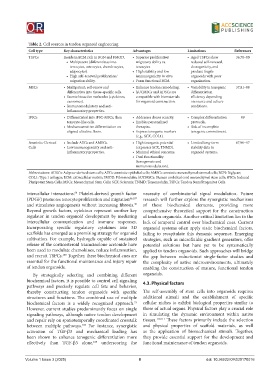
Table 2. Cell sources in tendon organoid engineering
             Cell type      Key characteristics          Advantages              Limitations         References
             TSPCs          Reside in ECM rich in BGN and FMOD.  •   Superior proliferative/  •   Aged TSPCs show   36,78–80
                             •   Multipotent (differentiates into   migratory ability vs.   reduced self-renewal,
                               tenocytes, osteocytes, chondrocytes,   tenocytes.  clonogenicity, and
                               adipocytes).              •   High stability and low   produce fragile
                             •   High self-renewal proliferation/  immunogenicity in vitro.  organoids with poor
                               migration ability.        •   Form functional ECM.  organization.
             MSCs           •   Multipotent; self-renew and   •   Enhance tendon remodeling.  •   Variability in tenogenic   37,81–88
                              differentiate into tissue-specific cells.  •   hUCMSCs and ADSCs are   differentiation
                            •   Secrete bioactive molecules (cytokines,   compatible with biomaterials   efficiency depending
                              exosomes).                   for organoid construction.  on source and culture
                            •   Immunomodulatory and anti-                        conditions.
                              inflammatory properties.
             iPSCs          •   Differentiated into iPSC-MSCs, then   •   Addresses donor scarcity.  •   Complex differentiation   89
                              tenocyte-like cells.       •   Enables personalized   protocols.
                            •   Mechanosensitive differentiation on   therapies.  •   Risk of incomplete
                              aligned ultrafine fibers.  •   Express tenogenic markers   tenogenic commitment.
                                                           (e.g., SCX, COL1).
             Amniotic-Derived   •   Include AECs and AMSCs.  •   High tenogenic potential   •   Limited long-term   67,90–97
             Cells          •   Low immunogenicity and anti-  (expresses SCX, TNMD).  stability data in
                              inflammatory properties.   •   Minimal ethical concerns.  organoid systems.
                                                         •   Dual functionality
                                                           (tenogenesis and
                                                           immunomodulation).
             Abbreviations: ADSCs: Adipose-derived stem cells; AECs: amniotic epithelial cells; AMSCs: amniotic mesenchymal stromal cells; BGN: Biglycan;
             COL1: Type 1 collagen; ECM: extracellular matrix; FMOD: Fibromodulin; hUCMSCs: Human umbilical cord mesenchymal stem cells; iPSCs: Induced
             Pluripotent Stem Cells; MSCs: Mesenchymal Stem Cells; SCX: Scleraxis; TNMD: Tenomodulin; TSPCs: Tendon Stem/Progenitor Cells.

            intercellular  interactions.   Platelet-derived  growth  factor   necessity of combinatorial signal modulation. Future
                                 66
            (PDGF) promotes tenocyte proliferation and migration 46,107    research will further explore the synergistic mechanisms
            and stimulates angiogenesis without increasing fibrosis.    of these biochemical elements, providing more
                                                          46
            Beyond growth factors, cytokines represent another key   comprehensive theoretical support for the construction
            regulator in tendon organoid development by mediating   of tendon organoids. Another critical limitation lies in the
            intercellular communication and immune responses.   lack of temporal control over biochemical cues. Current
            Incorporating specific regulatory cytokines into 3D   organoid systems often apply static biochemical factors,
            scaffolds has emerged as a promising strategy for organoid   failing to recapitulate  this  dynamic  sequence. Emerging
            cultivation. For example, hydrogels capable of sustained   strategies, such as microfluidic gradient generators, offer
            release of the corticosteroid triamcinolone acetonide have   potential  solutions  but  have  yet  to  be  systematically
            been used to modulate chemokines, reduce inflammation,   applied to tendon organoids. Such approaches will bridge
            and recruit TSPCs.  Together, these biochemical cues are   the gap between reductionist single-factor studies and
                            108
            essential for the functional maintenance and injury repair   the complexity of native microenvironments, ultimately
            of tendon organoids.                              enabling the construction of mature, functional tendon
               By  strategically  selecting  and  combining  different   organoids.
            biochemical factors, it is possible to control cell signaling   4.3. Physical factors
            pathways and precisely regulate cell fate and behavior,
            thereby constructing tendon organoids with specific   The self-assembly of stem cells into organoids requires
            structures and functions. The combined use of multiple   additional stimuli and the establishment of specific
            biochemical factors is a widely recognized approach.    cellular niches to exhibit biological properties similar to
                                                          73
            However, current studies predominantly focus on single   those of actual organs. Physical factors play a crucial role
            signaling pathways, although native tendon development   in simulating the dynamic environment within native
            and repair rely on spatiotemporally coordinated crosstalk   tissues. 110,111  These factors  primarily  include the  selection
            between multiple pathways.  For instance, synergistic   and physical properties of scaffold materials, as well
                                    105
            activation of TGF-β3 and mechanical loading has   as  the application of  biomechanical stimuli.  Together,
            been shown to enhance tenogenic differentiation more   they provide essential support for the development and
            effectively than TGF-β3 alone,  underscoring the   functional maintenance of tendon organoids.
                                         109


            Volume 1 Issue 3 (2025)                         8                            doi: 10.36922/OR025170016

