


Page 137 - OR-1-3
P. 137
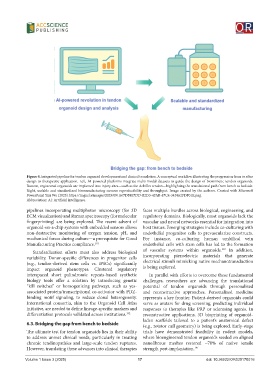
Figure 4. Integrated pipeline for tendon organoid development and clinical translation. A conceptual workflow illustrating the progression from in silico
            design to therapeutic application. Left, AI-powered platforms integrate multi-modal datasets to guide the design of biomimetic tendon organoids.
            Bottom, engineered organoids are implanted into injury sites—such as the Achilles tendon—highlighting the translational path from bench to bedside.
            Right, scalable and standardized biomanufacturing ensures reproducibility and throughput. Image created by the authors. Created with Microsoft
            PowerPoint Yixi Wu (2025) https://imgur.la/images/2025/09/16/7D58E7DD-B2D3-4FAB-87C4-34F462FDF01E.png.
            Abbreviation: AI: Artificial intelligence.

            pipelines  incorporating  multiphoton  microscopy  (for  3D   faces multiple hurdles across biological, engineering, and
            ECM visualization) and Raman spectroscopy (for molecular   regulatory domains. Biologically, most organoids lack the
            fingerprinting) are being explored. The recent advent of   vascular and neural networks essential for integration into
            organoid-on-a-chip systems with embedded sensors allows   host tissues. Emerging strategies include co-culturing with
            non-destructive monitoring of oxygen tension, pH, and   endothelial progenitor cells to prevascularize constructs.
            mechanical forces during culture—a prerequisite for Good   For instance, co-culturing human umbilical vein
            Manufacturing Practice compliance. 191            endothelial cells with stem cells has led to the formation
                                                                                               193
               Standardization  efforts  must  also  address  biological   of vascular systems within organoids.  In addition,
            variability. Donor-specific differences in progenitor cells   incorporating piezoelectric materials that generate
            (e.g., tendon-derived stem cells vs. iPSCs) significantly   electrical stimuli mimicking native mechanotransduction
            impact organoid phenotypes. Clustered regulatory   is being explored.
            interspaced short palindromic repeats-based synthetic   In parallel with efforts to overcome these fundamental
            biology tools offer a solution by introducing genetic   challenges, researchers are advancing the translational
            “kill  switches”  or  homogenizing  pathways,  such  as  yes-  potential of tendon organoids through personalized
            associated protein/transcriptional co-activator with PDZ-  and reconstructive approaches. Personalized medicine
            binding motif signaling, to reduce clonal heterogeneity.   represents a key frontier. Patient-derived organoids could
            International consortia, akin to the Organoid Cell Atlas   serve as avatars for drug screening, predicting individual
            initiative, are needed to define lineage-specific markers and   responses to therapies like PRP or sclerosing agents. In
            differentiation protocols validated across institutions. 192  reconstructive applications, 3D bioprinting of organoid-
                                                              laden scaffolds tailored to a patient’s anatomical defect
            6.3. Bridging the gap from bench to bedside       (e.g., rotator cuff geometry) is being explored. Early-stage
            The ultimate test for tendon organoids lies in their ability   trials have demonstrated feasibility in rodent models,
            to address unmet clinical needs, particularly in treating   where bioengineered tendon organoids seeded on aligned
            chronic  tendinopathies  and  large-scale  tendon  ruptures.   nanofibrous  meshes  restored  ~70%  of  native tensile
            However, translating these advances into clinical therapies   strength post-implantation. 191

            Volume 1 Issue 3 (2025)                         17                           doi: 10.36922/OR025170016

