


Page 47 - TD-2-2
P. 47
Tumor Discovery                                                   Choroid plexus tumors: Benign to malignant


            system. This minimally invasive nature of the treatment   complications, neuroendoscopy may be the preferred
            and the inherent association CPTs have with the ventricular   method to minimize surgical trauma in this fragile
            system make it an appealing technology for CPT resection.   population. The minimal surgical trauma associated with
            Limitations of this approach include large tumor size,   neuroendoscopy  was  the  primary  reason  for  adopting  a
            dense vascularization, and inability to tolerate long surgical   monoportal neuroendoscopic approach in a 5-month-old
            procedures . Therefore, the indications for this type of   male infant and a 10-week-old male infant, who might not
                     [89]
            surgery include small tumor size (<3 cm in diameter), lack   have survived the trauma of open surgery [92,93] .
            of hard consistency, and poor vascularization . As CPTs   While these case reports focus on tumors that meet the
                                                [90]
            of the third ventricle tend to be smaller and less vascular
            than their counterparts in the lateral ventricle, most cases   size criteria for endoscopic resection, endoscopy can also
            of pure endoscopic resection focused on tumors in this   be used for large tumors in a segmental removal approach,
            site, with some more recent exceptions .           allowing smaller segments to pass through the scope port.
                                           [91]
                                                               Optical and electromagnetic neuronavigation may obviate
              While neuroendoscopy has gained growing popularity   the need for ventricular dilatation, which in the past was
            in the context of choroid plexus coagulation, open   considered a prerequisite for ventricular neuroendoscopy.
            microsurgical resection is still considered the standard   The  use  of  modern  neuroendoscopic  tools,  such  as
            treatment of CPT resection. Nevertheless, several purely   endoscopic ultrasonic surgical aspirators, may obviate
            endoscopic resections of CPTs have been attempted in the   some of these limitations in the future [90,100] .
            past, yielding promising results [92-99] . Some approaches,
            such as those reported by Reddy et al., involved a hybrid   4.2. LITT and PTT
            endoscopic and microsurgical approach to a third ventricle   LITT is a less invasive approach that uses laser energy to
            CPT . In this case, endoscopy was used initially to biopsy   heat and destroy tumor cells. LITT is usually MRI-guided
               [94]
            and mobilizes the tumor from the third ventricle into the   and particularly useful for tumors in difficult-to-reach
            lateral ventricle, followed by open removal of resected   areas, such as CPTs. Despite this, therapeutic application
            tissue via a transcortical approach.
                                                               in growths of the choroid plexus has been very limited.
              Spennato  et al. recently reported two cases of pure   While LITT has historically been indicated for recurrent
            endoscopic removal of CPPs in the 3   ventricle: one   glioblastoma, it has continued to see success in treating
                                             rd
            in a 7-month-old infant with macrocrania and bulging   other brain tumors [101-105] . A case series by Tovar-Spinoza
            fontanel, and another in a 3-year-old boy who underwent   and Choi followed 11 pediatric patients with 12 brain
            an MRI because of a month-long headache. In both cases,   tumors and reported successful ablations with minimal
            tumors were successfully resected, and MRI confirmed the   complications using LITT [106] . Although many of the lesions
            absence of recurrence at the 3-year and 5-year follow-up,   treated  were  located  in  difficult  and  risky  areas  to  treat,
            respectively. As these tumors have a higher incidence in   such as the cerebellar peduncle, thalamus, or midbrain,
            infants and toddlers, who are more susceptible to surgical   only a single patient with 2 choroid plexus growths was
                                                               treated. Based on these findings, while administration of
                                                               LITT in the choroid plexus is possible, further pre-clinical
                                                               trials using animal models are warranted to optimize the
                                                               treatment of cancerous growths in this region.
                                                                 PTT is another novel, non-invasive cancer treatment
                                                               which has emerged in recent years [107,108] . This therapy
                                                               uses photothermal agents that absorb light energy and
                                                               convert  it  into  thermal  energy to  induce  heat  ablation
                                                               of tumor cells upon laser irradiation [109] . There are two
                                                               general methods: traditional PTT (>50°C) and mild PTT
                                                               (42 – 45°C). Traditional PTT uses high heat to induce
                                                               tumor necrosis but may result in inevitable damage and
                                                               inflammation of surrounding tissue [110] . In contrast, mild
                                                               PTT  is  a  more  promising  technology  for  brain  tumors
                                                               because of its negligible side effects, inducing apoptosis
                                                               rather than necrosis [111] . Furthermore, mild PTT offers
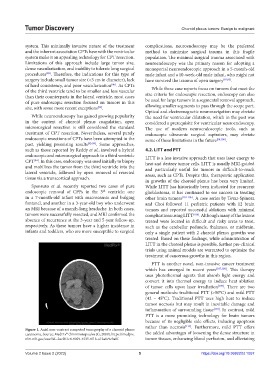
            Figure 1. Axial non-contrast computed tomography of a choroid plexus
                             ®
            carcinoma. Source: MedPix  (Smirniotopoulos JG, 2009), https://medpix.  the added advantages of loosening the dense structure in
            nlm.nih.gov/case?id=2ae2b1c4-9029-4535-8f1b-a12a8c9e3a8f.   tumor tissues, enhancing blood perfusion, and alleviating

            Volume 2 Issue 2 (2023)                         5                          https://doi.org/10.36922/td.1057

