


Page 29 - TD-3-3
P. 29
Tumor Discovery                                                Adjuvant immunotherapy in high-risk melanoma


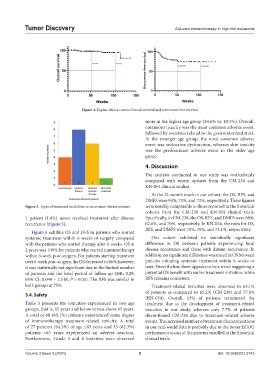
                                    Figure 4. Kaplan–Meier curves: Overall survival and recurrence-free survival

                                                               more in the higher age group (24.6% vs. 10.5%). Overall,
                                                               cutaneous toxicity was the most common adverse event,
                                                               followed by toxicities related to the gastrointestinal tract.
                                                               In  the  younger  age  group,  the  most  common  adverse
                                                               event was endocrine dysfunction, whereas skin toxicity
                                                               was the predominant adverse event in the older age
                                                               group.
                                                               4. Discussion

                                                               The analysis conducted in our study was meticulously
                                                               compared with recent updates from the CM-238 and
                                                               KN-054 clinical studies.
                                                                 At the 24-month mark in our cohort, the OS, RFS, and
                                                               DMFS were 94%, 73%, and 73%, respectively. These figures
            Figure 5. Types of treatment modalities in recurrence disease patients  were notably comparable to those reported in the historical
                                                               cohorts from the CM-238 and KN-054 clinical trials.
            1  patient (1.0%) never received treatment after disease   Specifically, in CM-238, the OS, RFS, and DMFS were 88%,
            recurrence (Figure 5).                             62.6%, and 70%, respectively. In KN-054, the rates for OS,
                                                               RFS, and DMFS were 70%, 70%, and 73.1%, respectively.
              Figure 6 exhibits OS and DFS in patients who started
            systemic treatment within 6 weeks of surgery compared   Our cohort exhibited no statistically significant
            with the patients who started therapy after 6 weeks. OS at   difference in OS between patients experiencing local
            2 years was 100% for patients who started immunotherapy   disease recurrence and those with distant recurrence. In
            within 6-week post-surgery. For patients starting treatment   addition, no significant difference was noted in OS between
            over 6-week post-surgery, the OS decreased to 86%; however,   patients initiating systemic treatment within 6  weeks or
            it was statistically not significant due to the limited number   later. Nevertheless, there appears to be a trend suggesting a
            of patients and the brief period of follow-up (HR:  0.29;   potential OS benefit with earlier treatment initiation, while
            95% CI: 0.040 – 2.118; P > 0.05). The RFS was similar in   RFS remains consistent.
            both groups at 75%.                                  Treatment-related toxicities were observed in 63.1%
                                                               of patients as compared to 85.2% (CM-238) and 77.8%
            3.4. Safety
                                                               (KN-054). Overall, 13% of patients terminated the
            Table 3 presents the toxicities experienced in two age   treatment due to the development of treatment-related
            groups, that is, 65 years and below versus above 65 years.   toxicities in our study, whereas only 7.7% of patients
            A total of 60 (63.1%) patients experienced some degree   discontinued CM-238 due to treatment-related adverse
            of immunotherapy treatment-related toxicity. A  total   events. The increased number of treatment discontinuations
            of 27 patients (64.3%) of age ≤65 years and 33 (62.3%)   in our real-world data is probably due to the better ECOG
            patients >65  years experienced an adverse reaction.   performance status of the patients enrolled in the historical
            Furthermore, Grade  3 and 4 toxicities were observed   clinical trials.


            Volume 3 Issue 3 (2024)                         5                                 doi: 10.36922/td.3143

