


Page 117 - TD-3-4
P. 117
Tumor Discovery                                                   Bioinformatics insights into CCL2 mutations


            A


            B


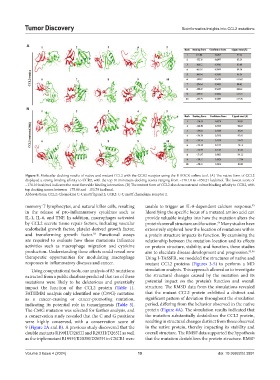
            Figure 9. Molecular docking results of native and mutant CCL2 with the CCR2 receptor using the HDOCK online tool. (A) The native form of CCL2
            displayed a strong binding affinity to CCR2, with the top 10 minimum docking scores ranging from −176.10 to −150.21 kcal/mol. The lowest score of
            −176.10 kcal/mol indicates the most favorable binding interaction. (B) The mutant form of CCL2 also demonstrated robust binding affinity to CCR2, with
            top docking scores between −175.86 and −153.79 kcal/mol.
            Abbreviations: CCL2: Chemokine C-C motif ligand 2; CCR2: C-C motif chemokine receptor 2.

            memory T lymphocytes, and natural killer cells, resulting   unable to trigger an IL-8-dependent calcium response.
                                                                                                            93
            in the release of pro-inflammatory cytokines such as   Identifying the specific locus of a mutated amino acid can
            IL-1, IL-6, and TNF. In addition, macrophages activated   provide valuable insights into how the mutation alters the
            by CCL2 secrete tissue repair factors, including vascular   protein’s overall structure and function.  Many studies have
                                                                                              94
            endothelial growth factor, platelet-derived growth factor,   extensively explored how the location of mutations within
            and transforming growth factor.  Functional assays   a protein structure impacts its function. By examining the
                                         92
            are required to evaluate how these mutations influence   relationship between the mutation location and its effects
            activities such as macrophage migration and cytokine   on protein structure, stability, and function, these studies
            production. Understanding these effects could reveal new   aim to elucidate disease development and progression. 95,96
            therapeutic opportunities for modulating macrophage   Using I-TASSER, we modeled the structures of native and
            responses in inflammatory diseases and cancer.     mutant CCL2 proteins (Figures  3-5) to perform a MD
              Using computational tools, our analysis of 83 mutations   simulation analysis. This approach allowed us to investigate
            extracted from a public database predicted that ten of these   the structural changes caused by the mutation and its
            mutations were likely to be deleterious and potentially   potential impact on the protein’s function and overall
            impact the function of the CCL2 protein (Table 1).   structure. The RMSD data from the simulations revealed
            FATHMM analysis only identified one (C59G) mutation   that the mutant CCL2 protein exhibited a distinct and
            as a cancer-causing or cancer-promoting mutation,   significant pattern of deviation throughout the simulation
            indicating  its  potential  role  in  tumorigenesis  (Table  3).   period, differing from the behavior observed in the native
            The C59G mutation was selected for further analysis, and   protein (Figure 4A). The simulation results indicated that
            a conservation study revealed that the C and G positions   the mutation substantially destabilizes the CCL2 protein,
            were  highly  conserved,  with  a  conservation  score  of   resulting in structural changes distinct from those observed
            9 (Figure 2A and B). A previous study discovered that the   in the native protein, thereby impacting its stability and
            double mutants R199H/D265H and R203H/D265H as well   overall structure. The RMSF data supported the hypothesis
            as the triple mutant R199H/R203H/D265H in CXCR1 were   that the mutation destabilizes the protein structure. RMSF


            Volume 3 Issue 4 (2024)                         19                                doi: 10.36922/td.3891

