


Page 148 - TD-3-4
P. 148
Tumor Discovery                                                     Primarily enucleated RB patient’s analysis


                                                               3.4. Treatment and outcomes

                                                               In addition to primary enucleation, 33.3% (n = 26) of
                                                               patients received  adjuvant chemotherapy  only  and  5.1%
                                                               (n = 4) received both adjuvant chemotherapy and external
                                                               beam radiotherapy (EBRT). A total of 57.7% (n = 45) of
                                                               patients underwent primary enucleation without additional
                                                               chemotherapy due to the absence of histopathological HRFs
                                                               and 3.8% (n = 3) refused further treatment. Approximately
                                                               27% (n = 21) of children died and 3.8% (n = 3) were lost
                                                               to follow-up (presumed deceased). Approximately 23.07%
                                                               (n = 18) of patients died due to metastasis and 3.8% (n = 3)
                                                               died suddenly of unknown causes. The overall survival rate
                                                               was 69.23%. The follow-up period after enucleation ranged
                                                               from 6 months to 12 years.
                                                               4. Discussion
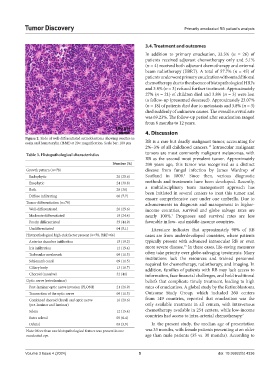
            Figure 2. Slide of well-differentiated retinoblastoma showing rosettes in
            eosin and hematoxylin (H&E) at 20× magnification. Scale bar: 100 µm  RB is a rare but deadly malignant tumor, accounting for
                                                               2%–3% of all childhood cancers.  Intraocular malignant
                                                                                          14
            Table 3. Histopathological characteristics         tumors are most commonly malignant melanomas, with
                                                               RB as the second most prevalent tumor. Approximately
                                                 Number (%)    200  years  ago,  this  tumor  was  recognized  as  a  distinct
            Growth pattern (n=78)                              disease  from  fungal  infection  by  James  Wardrop  of
                                                                               1
             Endophytic                            20 (25.6)   Scotland  in 1809.  Since  then,  various diagnostic
             Exophytic                             24 (30.8)   methods and treatments have been developed. Recently,
             Both                                  28 (36)     a multidisciplinary team management approach has
                                                               been initiated in several centers to treat this tumor and
             Diffuse infiltrating                  06 (7.7)    ensure comprehensive care under one umbrella. Due to
            Tumor differentiation (n=78)                       advancements in diagnosis and management in higher-
             Well-differentiated                   20 (25.6)   income  countries,  survival  and  globe  salvage  rates  are
             Moderate differentiated               19 (24.4)   nearly  100%.   Prognoses  and  survival  rates  are  less
                                                                          7
             Poorly differentiated                 35 (44.9)   favorable in low- and middle-income countries.
             Undifferentiated                      04 (5.1)      Literature indicates that approximately 90% of RB
            Histopathological high-risk factor present (n=78, HRF=66)  cases are from underdeveloped countries, where patients
             Anterior chamber infiltration         15 (19.2)   typically  present  with  advanced  intraocular  RB  or  even
                                                                               15
             Iris infiltration                     12 (15.4)   more severe disease.  In these cases, life-saving measures
             Trabecular meshwork                   09 (11.5)   often take priority over globe-salvaging treatments. Many
             Schlemm’s canal                       09 (11.5)   institutions lack the resources and trained personnel
                                                               required for chemotherapy, radiotherapy, and imaging. In
             Ciliary body                          13 (16.7)   addition, families of patients with RB may lack access to
             Choroid (massive)                     32 (41)     information, face financial challenges, and hold traditional
            Optic nerve (retrolaminar)                         beliefs that complicate timely treatment, leading to high
             Post-laminar optic nerve invasion (PLONI)  21 (26.9)  rates of enucleation. A global study by the Retinoblastoma
             Transection of the optic nerve        09 (11.5)   Outcome Study Group, which included 260 centers
             Combined choroid (focal) and optic nerve   16 (20.6)  from 149 countries, reported that enucleation was the
             (pre-laminar and laminar)                         only available treatment in all centers, with intravenous
             Sclera                                12 (15.4)   chemotherapy available in 254 centers, while low-income
             Extra scleral                         05 (6.4)    countries had access to intra-arterial chemotherapy. 7
             Orbital                               03 (3.9)      In the present study, the median age of presentation
            Note: More than one histopathological feature was present in one   was 33 months, with female patients presenting at an older
            enucleated eye.                                    age than male patients (35 vs. 30 months). According to


            Volume 3 Issue 4 (2024)                         5                                 doi: 10.36922/td.4336

