


Page 171 - TD-3-4
P. 171
Tumor Discovery                                                Signet ring cell carcinoma of the urinary bladder


                         A                                   D                 E
                                           B


                                           C


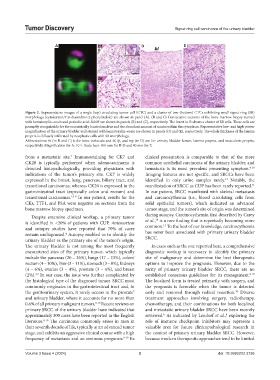
            Figure 2. Representative images of a single (top) circulating tumor cell (CTC) and a cluster of two (bottom) CTCs exhibiting small signet ring (SR)
            morphology (cytokeratin/4′,6-diamidino-2-phenylindole) are shown in panel (A). (B and C) Consecutive sections of the bone marrow biopsy stained
            with hematoxylin–eosin and periodic acid–Schiff are shown in panels (B) and (C), respectively. The insert in B shows a cluster of SR cells. These cells are
            promptly recognizable for the eccentrically located nucleus and the abundant amount of mucin within the cytoplasm. Representative low- and high-power
            magnification of the urinary bladder wall stained with hematoxylin–eosin are shown in panels (D) and (E), respectively. The whole thickness of the lamina
            propria is diffusely infiltrated by neoplastic cells with SR morphology.
            Abbreviations: bt (in B and C) is for bone trabecula and bl, lp, and mp (in D) are for urinary bladder lumen, lamina propria, and muscularis propria,
            respectively. Magnification for A: 10 ×. Scale bars: 100 mm for B-D and 80 mm for E.

            from a metastatic site.  Immunostaining for CK7 and   clinical presentation is comparable to that of the more
                               3
            CK20  is typically  performed when  adenocarcinoma is   common urothelial carcinoma of the urinary bladder, and
            detected histopathologically, providing physicians with   hematuria is its most prevalent presenting symptom. 8-10
            indications of the tumor’s primary site. CK7 is widely   Imaging features are not specific, and SRCCs have been
            expressed in the breast, lung, pancreas, biliary tract, and   identified in only urine samples rarely.  Notably, the
                                                                                                 13
            transitional carcinomas, whereas CK20 is expressed in the   manifestation of SRCC as CUP has been rarely reported.
                                                                                                            11
            gastrointestinal tract (especially colon and rectum) and   In our patient, SRCC manifested with skeletal metastasis
            transitional carcinomas. 1,3-6  In our patient, results for the   and carcinocythemia (i.e., blood circulating cells from
            CKs, TTF1, and PSA were negative on sections from the   solid epithelial tumors), which indicated an advanced
            bone marrow biopsy specimen.                       tumor stage, and the tumor’s site of origin was determined
              Despite extensive clinical workup, a primary tumor   during autopsy. Carcinocythemia, first described by Carey
                                                                   14
            is identified in <20% of patients with CUP. Antemortem   et al.,  is a rare finding that is reportedly becoming more
                                                                       15
            and autopsy studies have reported that 70% of cases   common.  To the best of our knowledge, carcinocythemia
                             4
            remain undiagnosed.  Autopsy enabled us to identify the   has never been associated with primary urinary bladder
            urinary bladder as the primary site of the tumor’s origin.   SRCC.
            The urinary bladder is not among the most frequently   In cases such as the one reported here, a comprehensive
            encountered sites of the primary tumor, which typically   diagnostic workup is necessary to identify the primary
            include the pancreas (20 – 26%), lungs (17 – 23%), colon/  site of malignancy and determine the best therapeutic
            rectum (4 – 10%), liver (3 – 11%), stomach (3 – 8%), kidneys   options to improve the prognosis. However, due to the
            (4 – 6%), ovaries (3 – 4%), prostate (3 – 4%), and breast   rarity of primary urinary bladder SRCC, there are no
            (2%).  In our case, the issue was further complicated by   established  consensus  guidelines  for  its  management. 8-10
                3,4
            the histological type of the diagnosed tumor. SRCC most   The localized form is treated primarily with surgery, and
            commonly originates in the gastrointestinal tract and, in   the prognosis is favorable when the tumor is detected
            the genitourinary system, it rarely occurs in the prostate    early and removed through radical resection.  Diverse
                                                          7
                                                                                                     10
            and urinary bladder, where it accounts for no more than   treatment approaches  involving surgery, radiotherapy,
            0.6% of all primary malignant tumors. 8-10  Recent reviews on   chemotherapy, and their combinations for both localized
            primary SRCC of the urinary bladder have indicated that   and metastatic urinary bladder SRCC have been recently
            approximately 300 cases have been reported in the English   reviewed.  As indicated by Lendorf et al.,  exploring the
                                                                                                 8
                                                                      8
            literature. 8-10  The carcinoma commonly arises in men in   role of immune checkpoint inhibitors may represent a
            their seventh decade of life, typically at an advanced tumor   valuable area for future clinicopathological research in
            stage, and exhibits an aggressive clinical course with a high   the context of primary urinary bladder SRCC. However,
            frequency of metastasis and an ominous prognosis. 8-10  Its   because modern therapeutic approaches tend to be limited


            Volume 3 Issue 4 (2024)                         3                                 doi: 10.36922/td.3736

