


Page 69 - TD-3-4
P. 69
Tumor Discovery                                                  RNA-protein complexes deregulated in cancer


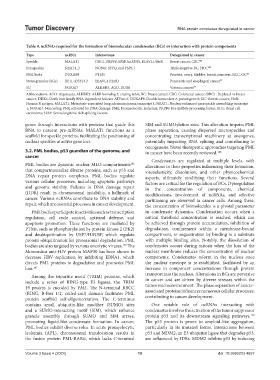
            Table 4. ncRNAs required for the formation of biomolecular condensates (BCs) or interaction with protein components
            Type             ncRNA        Interactome                    Deregulated in cancer
            Speckle          MALAT1       DBC1, PRPF6, SRSF, hnRNPs, ELAVL1/HuR  Breast cancer, CRC 102
            Paraspeckle      NEAT1_2      NONO, SFPQ, and PSPC1          Triple-negative BC, HCC 103
            PML body         DUXAP8       PTEN                           Prostate, ovary, bladder, breast, pancreas, RCC, GC 48
            Stress granules (SGs)  RP11-435F13.2  ELAVL1 (HuR)           Pancreatic and esophageal cancer 57
            SG               NORAD        ALKBH5, AGO, DDX6              Various cancers 57
            Abbreviations: AGO: Argonaute; ALKBH5: ALKB homolog 5, erasing m6A; BC: Breast cancer; CRC: Colorectal cancer; DBC1: Depleted in breast
            cancer; DDX6: Death box family RNA-dependent helicase ATPase 6; DUXAP8: Double homeobox A pseudogene 8; GC: Gastric cancer; HuR:
            Human R antigen; MALAT1: Metastasis-associated lung adenocarcinoma transcript 1; NEAT1: Nuclear enhanced paraspeckle assembling transcript
            1; NORAD: Noncoding RNA activated by DNA damage; PML: Promyelocytic leukemia; PRPF6: Pre-mRNA-processing factor; RCC: Renal cell
            carcinoma; SRSF: Serine/arginine-rich splicing factors.

            genes through interactions with proteins that guide this   SIM and SUMOylation sites. This alteration impairs PML
            RNA to nascent pre-mRNAs. MALAT1 functions as a    phase  separation,  causing  dispersed  microspeckles  and
            scaffold for speckle proteins, facilitating the positioning of   concentrating transcriptional machinery at oncogenes,
            nuclear speckles at active gene loci.              potentially impacting RNA splicing and contributing to
                                                               oncogenesis. Novel therapeutic approaches targeting PML
            3.2. PML bodies, p53 guardian of the genome, and   in cancer have been recently reviewed. 148
            cancer
                                                                 Condensates are regulated at multiple levels, with
            PML bodies are dynamic nuclear MLO compartments    alterations in their properties influencing their formation,
                                                         145
            that compartmentalize diverse proteins, such as p53 and   viscoelasticity, dissolution, and other physicochemical
            DNA repair protein complexes. PML bodies regulate   aspects, ultimately modifying their functions. Several
            various cellular processes, including apoptotic pathways   factors are critical for the regulation of BCs. Dysregulation
            and genome stability. Failures in DNA damage repair   in the concentration of components, chemical
            (DDR) result in chromosomal instability, a hallmark of   modifications, involvement of ncRNAs, and selective
            cancer. Various ncRNAs contribute to DNA stability and   partitioning  are  observed  in  cancer  cells.  Among  these,
            repair, which are essential processes in cancer development.  the concentration of biomolecules is a pivotal parameter

              PML bodies participate in activities such as transcription   in  condensate  dynamics.  Condensation  occurs  when  a
            regulation, cell cycle control, antiviral defense, and   critical threshold concentration is reached, which can
            apoptosis  promotion.  These  functions are  mediated  by   be achieved through protein accumulation, inhibition of
            PTMs, such as phosphorylation by protein kinase 2 (PK2)   degradation, confinement within a membrane-bound
            and deubiquitination by USP7/HAUSP, which regulate   compartment, or sequestration by binding to a substrate
            protein ubiquitination for proteasomal degradation. PML   with multiple binding sites. Notably, the  dissolution of
            bodies are also targeted by various oncolytic viruses.  The   condensates occurs during mitosis when the loss of the
                                                     146
            Momordica anti-HIV protein MAP30 has been shown to   nuclear membrane reduces the concentration of nuclear
            decrease HBV replication by inhibiting EBNA1, which   components. Condensates reform in the nucleus once
            directs PML proteins to degradation and promotes PML   the nuclear envelope is re-established, facilitated by an
            loss. 147                                          increase in component concentrations through protein

              Among the tripartite motif (TRIM) proteins, which   transport into the nucleus. Alterations in BCs are pervasive
            include a series of RING-type  E3 ligases, the TRIM   in cancer and are driven by diverse stresses within the
            19 protein is encoded by  PML. The N-terminal RBCC   tumor microenvironment. The phase separation of cancer-
            (RING, B-Box 1/2, coiled-coil) domain facilitates PML   associated proteins influences numerous cellular processes,
            protein  scaffold self-oligomerization.  The C-terminus   contributing to cancer development.
            contains  small  ubiquitin-like  modifier  (SUMO)  sites   One notable role of ncRNAs interacting with
            and a SUMO-interacting motif (SIM), which enhance   condensates involves the activation of the tumor suppressor
            granule  assembly through SUMO  and  SIM  arrays,   protein p53 and its downstream signaling pathways.
                                                                                                            149
            promoting liquid-like condensate formation. In cancer,   The p53 protein is prone to amyloid-like aggregation,
            PML bodies exhibit diverse roles. In acute promyelocytic   particularly in its mutated forms. Interactions between
            leukemia  (APL),  chromosomal  translocation  results  in   p53 and MDM2, an E3 ubiquitin ligase that degrades p53,
            the fusion protein PML-RARα, which lacks C-terminal   are influenced by IDRs. MDM2 inhibits p53 by inducing


            Volume 3 Issue 4 (2024)                         10                                doi: 10.36922/td.4657

