


Page 124 - TD-4-1
P. 124
Tumor Discovery                                          Pyrotinib and capecitabine in HER2-negative recurrence


                         A                       B                       C


                         D                       E                       F


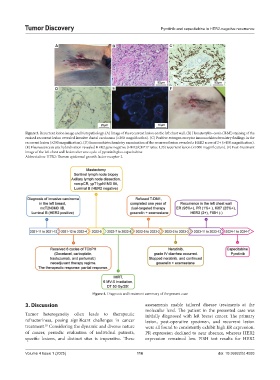
            Figure 3. Recurrent lesion image and histopathology. (A) Image of the recurrent lesion on the left chest wall. (B) Hematoxylin–eosin (H&E) staining of the
            excised recurrent lesion revealed invasive ductal carcinoma (×200 magnification). (C) Positive estrogen receptor immunohistochemistry findings in the
            recurrent lesion (×200 magnification). (D) Immunohistochemistry examination of the recurrent lesion revealed a HER2 score of 2+ (×400 magnification).
            (E) Fluorescence in situ hybridization revealed HER2 gene negative (HER2/CEP17 ratio: 1.33) recurrent lesion (×1000 magnification). (F) Post-treatment
            image of the left chest wall lesion after one cycle of pyrotinib plus capecitabine.
            Abbreviation: HER2: Human epidermal growth factor receptor 2.


                                        Figure 4. Diagnosis and treatment summary of the present case

            3. Discussion                                      assessments enable tailored disease treatments at the
                                                               molecular level. The patient in the presented case was
            Tumor  heterogeneity  often  leads  to  therapeutic   initially diagnosed with left breast cancer. The primary
            refractoriness, posing significant challenges in cancer   lesion,  post-operative  specimen,  and  recurrent  lesion
            treatment.  Considering the dynamic and diverse nature   were all found to consistently exhibit high ER expression.
                    18
            of cancer, periodic evaluation of individual patients,   PR expression declined to near absence, whereas HER2
            specific  lesions,  and  distinct  sites  is  imperative.  These   expression remained low. FISH test results for HER2


            Volume 4 Issue 1 (2025)                        116                                doi: 10.36922/td.4093

