


Page 65 - AC-1-2
P. 65
Arts & Communication                                                               Textile agency in art


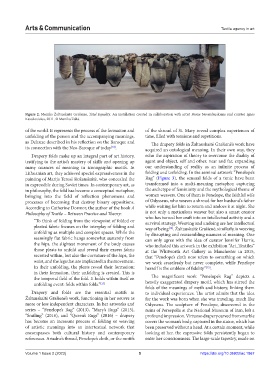
            Figure 2. Monika Žaltauskaitė Grašienė, Total Equality. An installation created in collaboration with artist Brone Neverdauskiene and curator Ignas
            Kazakevicius, 2011. © Monika Žaltė.

            of the world. It represents the process of the formation and   of the shroud of St. Mary reveal complex experiences of
            unfolding of the person and the accompanying meanings,   time, filled with tensions and repetitions.
            as Deleuze described in his reflection on the Baroque and   The drapery folds in Žaltauskaitė Grašienė’s work have
            its connection with the Neo-Baroque of today .     acquired an ontological meaning. In their own way, they
                                                [12]
              Drapery folds make up an integral part of art history,   echo the aspiration of theory to overcome the duality of
            testifying to the artist’s mastery of skills and opening up   agent and object, self and other, near and far, expanding
            many nuances of meaning in iconographic motifs. In   our understanding of reality as an infinite process of
            Lithuanian art, they achieved special expressiveness in the   folding and unfolding. In the seminal artwork “Penelope’s
            painting of Marija Teresė Rožanskaitė, who concealed the   Rag” (Figure  3), the sensual folds of a tunic have been
            in expressible during Soviet times. In contemporary art, as   transformed into a multi-meaning metaphor, capturing
            in philosophy, the fold has become a conceptual metaphor,   the archetype of femininity and the mythological theme of
            bringing into the field of reflection phenomena and   women weavers. One of them is Penelope, the faithful wife
            processes of becoming that destroy binary oppositions.   of Odysseus, who weaves a shroud for her husband’s father
            According to Catherine Dormor, the author of the book A   while waiting for him to return and undoes it at night. She
            Philosophy of Textile – Between Practice and Theory:  is not only a meticulous weaver but also a smart creator
               “To think of folding from the viewpoint of folded or   who has turned her craft into an intellectual activity and a
                                                               survival strategy. Weaving and undoing are her intellectual
               pleated fabric focuses on the interplay of folding and   way of being . Žaltauskaitė Grašienė, similarly, is weaving
                                                                         [14]
               unfolding as multiple and complex spaces. While the   by disrupting and reassembling nuances of meaning. One
               seemingly flat fabric hangs somewhat austerely from   can only agree with the idea of curator Jennifer Harris,
               the hips, the slightest movement of the body causes   who included this artwork in the exhibition “Art_Textiles”
               those pleats to unfold and reveal their excess fabric   at the Whitworth Art Gallery in Manchester in 2015,
               secreted within, but also the curvature of the hips, the   that “Penelope’s cloth now refers to something on which
               waist, and the legs that are implicated in the movement.   we work ceaselessly but never complete, while Penelope
               In their unfolding, the pleats reveal their formation;   herself is the emblem of fidelity” .
                                                                                         [15]
               in their formation, their unfolding is created. This is
               the temporal field of the fold. It holds within itself an   The magnificent work “Penelope’s Rag” depicts a
               unfolding event: folds within folds.” [13]      heavily exaggerated drapery motif, which has stirred the
                                                               folds of the meanings of myth and history, linking them
              Drapery and folds are the essential motifs in    to individual experiences. The artist admits that the idea
            Žaltauskaitė Grašienė’s work, functioning in her oeuvre as   for the work was born when she was traveling, much like
            more or less independent characters. In her artworks and   Odysseus. The sculpture of Penelope, discovered in the
            series – “Penelope’s Rag” (2013), “Mary’s Rugs” (2015),   ruins of Persepolis at the National Museum of Iran, left a
            “Smiling” (2016), and “Queen’s Rugs” (2016) – drapery   profound impression. Virtuoso drapery carved from marble
            has become an incessant process of folding or weaving   covers the woman’s body, captured in the statue, which has
            of artistic meanings into an intertextual network that   been preserved without a head. At a certain moment, while
            encompasses both cultural history and contemporary   looking at her, the expressive folds persistently began to
            references. Ariadne’s thread, Penelope’s cloth, or the motifs   enter her consciousness. The large-scale tapestry, made on


            Volume 1 Issue 2 (2023)                         5                         https://doi.org/10.36922/ac.1867

