


Page 77 - AC-3-3
P. 77
Arts & Communication                                            African art: Former passions, current concerns


                                                               and anxiety. Their return and preservation in African
                                                               museums, unless curated by those concerned according to
                                                               their visions, would simply replicate Western paradigms
                                                               of “cabinets of curiosity” as Yip has noted.  Clearly, we
                                                                                                  16
                                                               need to listen, hear, and respond to the desires of diverse
                                                               populations in the Global South that have provided us with
                                                               art pleasures for so long.
                                                               4. Conclusion

                                                               These are sensitive issues that require understanding and
                                                               dialogue and not only politically correct action. We need
                                                               not get rid of all the “merchandise” (as some dealers call
                                                               it) in our museums or collections; however, we cannot
                                                               sidestep restitution/repatriation and considerations
                                                               of reparation strategies. As scholars, with decades of
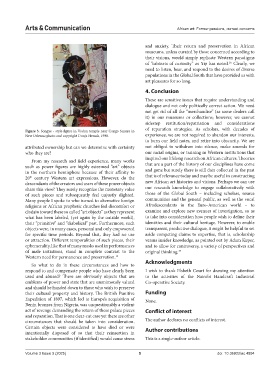
            Figure 3. Songye - style figure in Vodun temple near Congo Square in
            New Orleans; photo and copyright Dunja Hersak, 1998.  experience, we are not required to abandon our interests,
                                                               to burn our field notes, and retire into obscurity. We are
            attributed ownership but can we determine with certainty   not obliged to withdraw into silence, make amends for
            who they are?                                      our racial origins, or training in Western institutions that
              From my research and field experience, many works   inspired our lifelong research on African cultures. Theories
            such as power  figures are highly esteemed “art” objects   that are a part of the history of our disciplines have come
            in  the northern hemisphere  because  of  their  affinity  to   and gone but surely there is still data collected in the past
            20   century Western art expressions. However, do the   that is of relevance today and may be useful in constructing
              th
            descendants of the creators and users of these power objects   new African art histories and visions. Perhaps we can use
            share this view? They surely recognize the monetary value   our research knowledge to engage collaboratively with
            of such pieces and subsequently feel unjustly slighted.   those of the Global South – including scholars, source
            Many people I spoke to who turned to alternative foreign   communities and the general public, as well as the vocal
            religions or African prophetic churches feel discomfort or   Afrodescendants in the Euro-American world – to
            disdain toward these so called “art objects” as they represent   examine and explore new avenues of investigation, so as
            what has been labeled, (yet again by the outside world),   to take into consideration how people wish to define their
            their “primitive” and “diabolical” past. Furthermore, such   identities and their cultural heritage. However, to enable
            objects were, in many cases, personal and only empowered   transparent, productive dialogue, it might be helpful to set
            for specific time periods. Beyond that, they had no use   aside  competing  claims  to  expertise,  that  is,  scholarship
            or attraction. Different temporalities of such pieces, their   versus insider knowledge, as pointed out by Adam Kuper,
            ephemerality, like that of many masks used in performances   and to allow for controversy, a variety of perspectives and
            of male initiations, stand in complete contrast to the   original thinking. 17
            Western need for permanence and preservation. 15
              So what to do in these circumstances and how to   Acknowledgments
            respond to and compensate people who have clearly been   I wish to thank Elsbeth Court for drawing my attention
            used and abused? There are obviously objects that are   to the activities of the Nairobi Handcraft Industrial
            emblems of power and state that are unanimously valued   Co-operative Society.
            and should be handed down to those who wish to preserve
            their cultural property and history. The British Punitive   Funding
            Expedition of 1897, which led to Europe’s acquisition of   None.
            Benin bronzes from Nigeria, was unquestionably a violent
            act of revenge demanding the return of these palace pieces   Conflict of interest
            and reparation. That is one clear-cut case yet there are other
            circumstances that should  be  taken  into consideration.   The author declares no conflicts of interest.
            Certain objects were considered to have died or were   Author contributions
            intentionally disposed of so that their reinsertion in
            stakeholder communities (if identified) would cause stress   This is a single-author article.


            Volume 3 Issue 3 (2025)                         5                                doi: 10.36922/ac.4894

