


Page 43 - AIH-1-2
P. 43
Artificial Intelligence in Health                                        Blockchain for health-care security


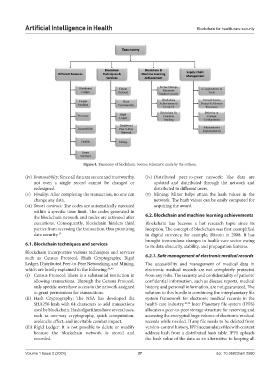
                                    Figure 4. Taxonomy of blockchain. Source: Schematic made by the authors.

            (iv)  Immutability: Since all data are secure and trustworthy,   (iv)  Distributed peer-to-peer network:  The data are
               not  even  a  single  record cannot  be  changed  or   updated and distributed through the network and
               redesigned.                                        distributed to different users.
            (v)  Finality: After completing the transaction, no one can   (v)  Mining:  Miner helps attain the hash values in the
               change any data.                                   network. The hash values can be easily computed for
            (vi) Smart contract: The codes are automatically executed   acquiring the award.
               within a specific time limit. The codes generated in
               the blockchain network and nodes are activated after   6.2. Blockchain and machine learning achievements
               executions. Consequently, blockchain hinders third   Blockchain has become a hot research topic since its
               parties from accessing the transaction, thus promising   inception. The concept of blockchain was first exemplified
               data security. 17                               in digital currency, for example, Bitcoin in 2008. It has
                                                               brought tremendous changes in health-care sector owing
            6.1. Blockchain techniques and services            to its data obscurity, stability, and propagation features.
            Blockchain incorporates various techniques and services
            such  as  Census  Protocol,  Hash Cryptography,  Rigid   6.2.1. Safe management of electronic medical records
            Ledger, Distributed Peer-to-Peer Networking, and Mining,   The accessibility and management of medical data in
            which are briefly explained in the following: 45,49  electronic medical records are not completely protected
            (i)  Census Protocol: There is a substantial restriction in   from any risks. The security and confidentiality of patients’
               allowing transactions. Through the Census Protocol,   confidential information, such as disease reports, medical
               only specific users have access to the network assigned   history, and personal information, are not guaranteed. The
               to grant permissions for transactions.          solution to this hurdle is combining the interplanetary file
            (ii)  Hash Cryptography:  The NSA has developed the   system framework for electronic medical records in the
               SHA256 hash with 64 characters to add transactions   health-care industry. 40,50  Inter Planetary file system (IPFS)
               used by blockchain. Hash algorithms have several uses,   allocates a peer-to-peer storage structure for reserving and
               such as one-way cryptography, quick computation,   accessing the encrypted huge volume of electronic medical
               avalanche effect, and inevitable combat impact.  records while needed. If any file needs to be deleted from
            (iii) Rigid  Ledger:  It is not possible to delete or modify   version-control history, IPFS accumulates files with content
               because the blockchain network is stored and    address hash from a distributed hash table. IPFS uploads
               recorded.                                       the hash value of the data as an alternative to keeping all


            Volume 1 Issue 2 (2024)                         37                               doi: 10.36922/aih.2580

