


Page 41 - AIH-1-2
P. 41
Artificial Intelligence in Health                                        Blockchain for health-care security


            5. Blockchain-based EHR system for                   A study reported that EHRs of medical data consist of
            healthcare 4.0 applications                        sensitive information and patients are permitted to share
                                                               this information with health-care centers, doctors, and
            EHRs are medical records that can be managed and secured   consultants. 15,41  EHRs are favorable for patients because
            by a blockchain system supported by genetic algorithm and   they simplify the storage of laboratory reports and medicine
            discrete wavelet transform. 32,41  The scope of a blockchain   lists and ease the appointments with attending doctors and
            platform for industrial health care gives a new vision and   the clinical consultations, especially for patients requiring
            future opportunities for Healthcare 4.0 Applications. The
            state-of-the-art focusing on the uses of blockchain with   treatment for diseases with an extended data history, such
                                                                                                 38,42
            EHR in the health-care sector is summarized in Table 3.  as cardiovascular disease, cancer, HIV, etc.   For patients
                                                               who often visit different medical institutions, organizing
                                                               and securing their medical history reports in the EHRs
                                                               with the help of blockchain technology proves to be
                                                               convenient for them. Through the data sharing features,
                                                               medical research institute may collaborate with different
                                                               health-care organizations under a regulated and secure
                                                               data sharing environment.
                                                                 Blockchain is known as a cryptographic protocol
                                                               for conserving shared information records through a
                                                               collection of computer networks where complete trust is
                                                               not mandatory among the nodes. The implementation of
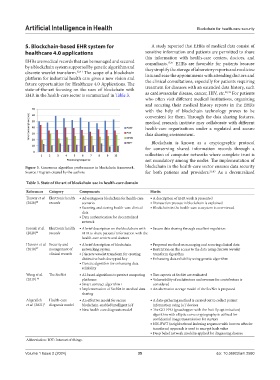
            Figure 3. Consensus algorithm performance in blockchain framework.   blockchain in the health-care sector ensures data security
            Source: Diagram created by the authors.            for both patients and providers. 21,43  As  a decentralized

            Table 3. State of the art of blockchain use in health‑care domain
            References  Category   Components                    Merits
            Tanwar et al.  Electronic health   •  Advantageous blockchain for health-care   • A description of EHR work is presented
            (2020) 48  records      scenario                     • Transaction process in blockchain is explained
                                   •  Securing and storing health-care clinical   • Blockchain in the health-care ecosystem is overviewed
                                    data
                                   •  Data authentication for decentralized
                                    network
            Farouk et al.  Electronic health   •  A brief description on the blockchain with   • Secure data sharing through excellent regulation
            (2020) 24  records      EHR to share patients’ information with the
                                    health-care centers and doctors
            Hussein et al.  Security and   •  A brief description of blockchain   • Proposed method on managing and securing clinical data
            (2018) 27  management of   networking system         •  Restriction on the access to the data using discrete wavelet
                      clinical records  •  Discrete wavelet transform for creating   transform algorithm
                                    distinctive hash decrypted key  • Enhancing data reliability using genetic algorithm
                                   •  Genetic algorithm for enhancing data
                                    reliability
            Wang et al.   The SecNet  •  Al-based algorithms to protect computing   • Two aspects of SecNet are evaluated
            (2019)  46              platforms                    •  Vulnerability of architecture and revenue for contributors is
                                   • Smart contract algorithm i   considered
                                   •  Implementation of SecNet in medical data   • An alternative storage model of the SecNet is proposed
                                    sharing
            Alqaralleh   Health-care   •  An effective model for secure   •  A data-gathering method is carried out to collect patient
            et al. (2021) 4  diagnosis model  blockchain-enabled intelligent IoT  information using IoT devices
                                   • New health-care diagnosis model  •  The GO-FFO (grasshopper with the fruit fly optimization)
                                                                  algorithm with elliptic curve cryptography is utilized for
                                                                  confidential image transmission for starters
                                                                 •  NIS-BWT (neighborhood indexing sequence with burrow wheeler
                                                                  transform) approach is used to encrypt hash value
                                                                 • Deep belief network model is applied for diagnosing disease
            Abbreviation: IOT: Internet of things.

            Volume 1 Issue 2 (2024)                         35                               doi: 10.36922/aih.2580

