


Page 40 - AIH-1-2
P. 40
Artificial Intelligence in Health                                        Blockchain for health-care security


                                                               of the PBFT algorithm is significantly different because the
                                                               blockchain nodes are shared and maintained by multiple
                                                               nodes, complicating the process of detecting medical data
                                                               and protecting them from potential attackers. 29

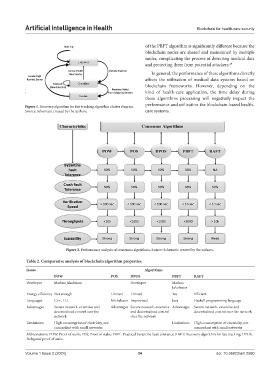
                                                                 In general, the performance of these algorithms directly
                                                               affects the utilization of medical data systems based on
                                                               blockchain frameworks. However, depending on the
                                                               kind of health-care application, the time delay during
                                                               these algorithms processing will negatively impact the

            Figure 1. Recovery algorithm for fast tracking algorithm cluster diagram.   performance and utilization the blockchain-based health-
            Source: Schematic created by the authors.          care systems.


                             Figure 2. Performance analysis of consensus algorithms. Source: Schematic created by the authors.

            Table 2. Comparative analysis of blockchain algorithm properties
            Issues                                            Algorithms
                        POW                     POS      DPOS             PBFT      RAFT
            Developer   Markus Jakobsson                 Developer        Markus
                                                                          Jakobsson
            Energy efficiency Not enough        Limited  Limited          Yes       Efficient
            Languages   C++, LLL                Michaleson Improvised     Java      Haskell programming language
            Advantages  Secure network, extensive and   Advantages Secure network, extensive  Advantages  Secure network, extensive and
                        decentralized control over the   and decentralized control   decentralized control over the network
                        network                          over the network
            Limitations  High consumption of electricity, not             Limitations  High consumption of electricity, not
                        concordant with small networks                              concordant with small networks
            Abbreviations: POW: Proof of work; POS: Proof of stake; PBFT: Practical byzantine fault tolerance; RAFT: Recovery algorithm for fast tracking; DPOS:
            Delegated proof of stake.


            Volume 1 Issue 2 (2024)                         34                               doi: 10.36922/aih.2580

