


Page 114 - AIH-2-1
P. 114
Artificial Intelligence in Health                      ML approach for client and program effects in OUD retention


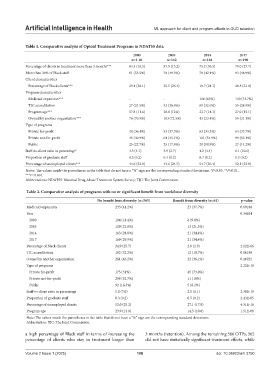
            Table 1. Comparative analysis of Opioid Treatment Programs in NDATSS data
                                                          2000          2005            2014           2017
                                                         n=1 10         n=142          n=184          n=190
            Percentage of clients in treatment more than 3 months***  84.3 (16.5)  87.9 (13.2)  75.2 (30.5)  79.0 (27.7)
            More than 20% of Black staff                61 (55.5%)     70 (49.3%)     78 (42.4%)     93 (48.9%)
            Client characteristics
             Percentage of Black clients***             29.4 (28.1)    25.5 (26.4)    18.7 (24.1)    20.8 (23.0)
            Program characteristics
             Medicaid expansion***                      -              -              116 (63%)      140 (73.7%)
             TJC accreditation                          27 (24.5%)     52 (36.6%)     60 (32.6%)     55 (28.9%)
             Program age***                             17.8 (11.6)    20.8 (12.0)    23.7 (14.1)    27.0 (15.1)
             Owned by another organization***           78 (70.9%)     103 (72.5%)    43 (23.4%)     59 (31.1%)
            Type of programs
             Private for-profit                         40 (36.4%)     53 (37.3%)     63 (34.2%)     64 (33.7%)
             Private not-for-profit                     45 (40.9%)     64 (45.1%)     101 (54.9%)    99 (52.1%)
             Public                                     25 (22.7%)     25 (17.6%)     20 (10.9%)     27 (14.2%)
            Staff-to-client ratio in percentage*        4.3 (4.1)      3.9 (2.7)      4.2 (4.4)      6.1 (10.6)
            Proportion of graduate staff                0.3 (0.2)      0.4 (0.2)      0.3 (0.2)      0.3 (0.2)
            Percentage of unemployed clients***         44.6 (23.0)    43.6 (24.7)    54.7 (26.4)    52.1 (25.8)
            Notes: The values inside the parentheses in the table that do not have a “%” sign are the corresponding standard deviations. *P<0.05, **P<0.01,
            ***P<0.001.
            Abbreviations: NDATSS: National Drug Abuse Treatment System Survey; TJC: The Joint Commission.

            Table 2. Comparative analysis of programs with no or significant benefit from workforce diversity
                                          No benefit from diversity (n=565)  Benefit from diversity (n=61)  p‑value
            Medicaid expansion                    233 (41.2%)                    23 (37.7%)            0.69188
            Year                                                                                       0.34624
              2000                                104 (18.4%)                    6 (9.8%)
              2005                                129 (22.8%)                    13 (21.3%)
              2014                                163 (28.8%)                    21 (34.4%)
              2017                                169 (29.9%)                    21 (34.4%)
            Percentage of Black clients           24.9 (25.7)                    2.6 (2.9)             2.12E-66
            TJC accreditation                     182 (32.2%)                    12 (19.7%)            0.06199
            Owned by another organization         261 (46.2%)                    22 (36.1%)            0.16922
            Type of programs                                                                           2.22E-10
              Private for-profit                  175 (31%)                      45 (73.8%)
              Private not-for-profit              298 (52.7%)                    11 (18%)
              Public                              92 (16.3%)                     5 (8.2%)
            Staff-to-client ratio in percentage   5.0 (7.0)                      2.0 (1.1)             2.38E-19
            Proportion of graduate staff          0.3 (0.2)                      0.5 (0.2)             2.43E-05
            Percentage of unemployed clients      52.0 (25.2)                    27.1 (17.8)           4.31E-16
            Program age                           23.9 (13.9)                    14.5 (10.8)           1.51E-08
            Note: The values inside the parentheses in the table that do not have a “%” sign are the corresponding standard deviations.
            Abbreviation: TJC: The Joint Commission.

            a high percentage of Black staff in terms of increasing the   3 months (retention). Among the remaining 566 OTPs, 562
            percentage of clients who stay in treatment longer than   did not have statistically significant treatment effects, while


            Volume 2 Issue 1 (2025)                        108                               doi: 10.36922/aih.3750

