


Page 39 - AIH-2-1
P. 39
Artificial Intelligence in Health                            Deep learning on chest X-ray and CT for COVID-19


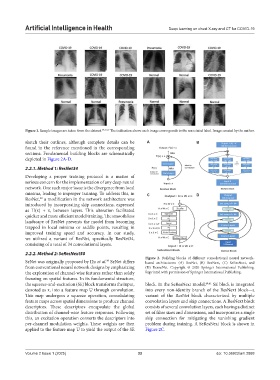
            Figure 1. Sample images are taken from the dataset. 34,35,37  The indication above each image corresponds to the associated label. Image created by the author.

            sketch their outlines, although complete details can be   A              B
            found in the reference mentioned in the corresponding
            sections. Fundamental building blocks are  schematically
            depicted in Figure 2A-D.

            2.2.1. Method 1: ResNet34
            Developing a  proper  training  protocol is a  matter  of
            serious concern for the implementation of any deep neural
            network. One such major issue is the divergence from local
            minima, leading to improper training. To address this, in   C            D
            ResNet,  a modification in the network architecture was
                  38
            introduced by incorporating skip connections, expressed
            as H(x) + x, between layers. This alteration facilitated
            quicker and more efficient model training. The smooth loss
            landscape of ResNet prevents the model from becoming
            trapped in local minima or saddle points, resulting in
            improved training speed and accuracy. In our study,
            we  utilized  a  variant  of  ResNet,  specifically  ResNet34,
            consisting of a total of 34 convolutional layers.
            2.2.2. Method 2: SeResNext50
                                                               Figure  2. Building blocks of different convolutional neural network-
            SeNet was originally proposed by Hu et al.  SeNet differs   based architectures: (A) ResNet, (B) ResNext, (C) SeResNext, and
                                              39
            from conventional neural network designs by emphasizing   (D) DenseNet. Copyright © 2020 Springer International Publishing.
            the exploration of channel-wise features rather than solely   Reprinted with permission of Springer International Publishing.
            focusing on spatial features. In its fundamental structure,
            the squeeze-and-excitation (SE) block transforms the input,   block. In the SeResNext model, 40,41  SE block is integrated
            denoted as x, into a feature map U through convolution.   into every non-identity branch of the ResNext block—a
            This map undergoes a squeeze operation, consolidating   variant of the ResNet block characterized by multiple
            feature maps across spatial dimensions to produce channel   convolution layers and skip connections. A ResNext block
            descriptors. These descriptors encapsulate the global   consists of several convolution layers, each having a distinct
            distribution of channel-wise feature responses. Following   set of filter sizes and dimensions, and incorporates a single
            this, an excitation operation converts the descriptors into   skip  connection for mitigating  the vanishing gradient
            per-channel modulation weights. These weights are then   problem during training. A SeResNext block is shown in
            applied to the feature map U to yield the output of the SE   Figure 2C.


            Volume 2 Issue 1 (2025)                         33                               doi: 10.36922/aih.2888

