


Page 42 - AIH-2-1
P. 42
Artificial Intelligence in Health                            Deep learning on chest X-ray and CT for COVID-19


                         A                                     B


                         C                                     D


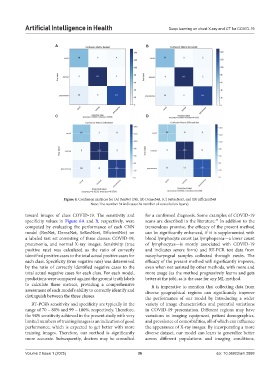
                            Figure 4. Confusion matrices for (A) ResNet (34), (B) DenseNet, (C) SeResNext, and (D) EfficientNet
                                        Note: The number 34 indicates the number of convolution layers).
            toward images of class  COVID-19. The sensitivity and   for a confirmed diagnosis. Some examples of COVID-19
            specificity values in  Figure  6A  and  B, respectively, were   scans are described in the literature.  In addition to the
                                                                                             47
            computed by evaluating the performance of each CNN   tremendous promise, the efficacy of the present method
            model (ResNet, DenseNet, SeResNext, EfficientNet) on   can be significantly enhanced, if it is supplemented with
            a labeled test set consisting of three classes: COVID-19,   blood lymphocyte count (as lymphopenia—a lower count
            pneumonia, and normal X-ray images. Sensitivity (true   of  lymphocytes—is  mostly  associated  with  COVID-19
            positive rate) was calculated as the ratio of correctly   and indicates severe form) and RT-PCR test data from
            identified positive cases to the total actual positive cases for   nasopharyngeal samples collected through swabs. The
            each class. Specificity (true negative rate) was determined   efficacy of the present method will significantly improve,
            by the ratio of correctly identified negative cases to the   even when not assisted by other methods, with more and
            total actual negative cases for each class. For each model,   more usage (as the method progressively learns and gets
            predictions were compared against the ground truth labels   better at the job), as is the case for any ML method.
            to calculate these metrics, providing a comprehensive   It is imperative to mention that collecting data from
            assessment of each model’s ability to correctly identify and   diverse geographical regions can significantly improve
            distinguish between the three classes.             the performance of our model by introducing a wider
              RT-PCR’s sensitivity and specificity are typically in the   variety of image characteristics and potential variations
            range of 70 – 80% and 99 – 100%, respectively. Therefore,   in COVID-19 presentation. Different regions may have
            the 94% sensitivity achieved in the present study with very   variations in imaging equipment, patient demographics,
            limited numbers of training images is an indication of good   and prevalence of comorbidities, all of which can influence
            performance, which is expected to get better with more   the appearance of X-ray images. By incorporating a more
            training  images.  Therefore,  our method  is significantly   diverse dataset, our model can learn to generalize better
            more accurate. Subsequently, doctors may be consulted   across different populations and imaging conditions,


            Volume 2 Issue 1 (2025)                         36                               doi: 10.36922/aih.2888

