


Page 51 - AIH-2-1
P. 51
Artificial Intelligence in Health                       Asymmetric U-Net for enhanced spinal MRI segmentation


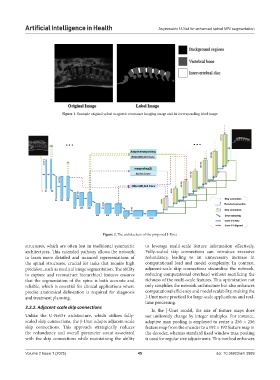
                           Figure 1. Example original spinal magnetic resonance imaging image and its corresponding label image


                                             Figure 2. The architecture of the proposed J-Unet
            structures, which are often lost in traditional symmetric   to leverage multi-scale feature information effectively.
            architectures. This extended pathway allows the network   Fully-scaled skip connections can introduce excessive
            to learn more detailed and nuanced representations of   redundancy, leading to an unnecessary increase in
            the spinal structures, crucial for tasks that require high   computational load and model complexity. In contrast,
            precision, such as medical image segmentation. The ability   adjacent-scale skip connections streamline the network,
            to capture and reconstruct hierarchical features ensures   reducing computational overhead without sacrificing the
            that the segmentation of the spine is both accurate and   richness of the multi-scale features. This optimization not
            reliable, which is essential for clinical applications where   only simplifies the network architecture but also enhances
            precise anatomical delineation is required for diagnosis   computational efficiency and model scalability, making the
            and treatment planning.                            J-Unet more practical for large-scale applications and real-
                                                               time processing.
            2.2.2. Adjacent-scale skip connections
                                                                 In the J-Unet model, the size of feature maps does
            Unlike  the U-Net3+  architecture,  which utilizes  fully-  not uniformly change by integer multiples. For instance,
            scaled skip connections, the J-Unet adopts adjacent-scale   adaptive max pooling is employed to resize a 256 × 256
            skip connections. This approach strategically reduces   feature map from the encoder to a 192 × 192 feature map in
            the  redundancy  and overall parameter  count  associated   the decoder, whereas standard fixed window max pooling
            with the skip connections while maintaining the ability   is used for regular size adjustments. This method enhances


            Volume 2 Issue 1 (2025)                         45                               doi: 10.36922/aih.3889

