


Page 138 - AIH-2-3
P. 138
Artificial Intelligence in Health                                   Early detection of CIN/cervicitis using ML


                                                               users sharing their  screening data and pathology results
                                                               with the ML algorithm, its robustness in providing
                                                               feedback on tissue status would increase over time, leading
                                                               to a more accurate, objective, and real-time tool for cervical
                                                               cancer screening. With the availability of a larger data set,
                                                               a supervised ML algorithm with SVM could be configured
                                                               to classify different grades of cervical cancer, such as LSIL,
                                                               HSIL, and CIN grades 1, 2, and 3, as well as carcinoma
                                                               in situ. The SVM classifies the data by identifying the best
                                                               line to separate data points, with the support vectors being
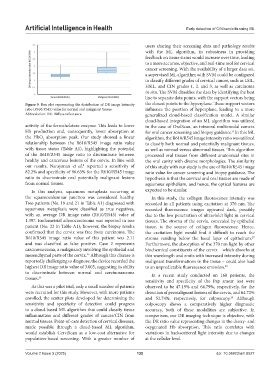
            Figure 9. Box plot representing the distribution of DR image intensity   the closest points to the hyperplane. These support vectors
            ratio (R610/R545) value for normal and malignant tissues  influence the position of hyperplane, leading to a more
            Abbreviation: DR: Diffuse reflectance.             generalized cloud-based classification model. A  similar
                                                               cloud-based integration of an ML algorithm was utilized
            activity of the ferrochelatase enzyme. This leads to lower   in the case of OralScan, an intraoral multimodal camera
            Hb  production  and,  consequently,  lower  absorption  at   for oral cancer screening and biopsy guidance.  In this ML
                                                                                                    8
            the HbO  absorption peak. Our study showed a linear   algorithm, the R610/R545 image intensity ratio was utilized
                   2
            relationship between the  R610/R545  image  ratio value   to classify both normal and potentially malignant tissues,
            with tissue status (Table A1), highlighting the potential   as well as normal versus abnormal tissues. This algorithm
            of the R610/R545 image ratio to discriminate between   processed oral tissues from different anatomical sites in
            healthy and cancerous lesions of the cervix. In line with   the oral cavity with diverse morphologies. The similarity
            our results, Narayanan  et  al.  reported a sensitivity of   of this study with our study is the use of R610/R545 image
                                    8
            82.2% and specificity of 96.63% for the R610/R545 image   ratio value for cancer screening and biopsy guidance. The
            ratio to discriminate oral potentially malignant lesions   hypothesis is that the cervical and oral tissues are made of
            from normal tissues.                               squamous epithelium, and hence, the optical features are
              In this analysis, squamous metaplasia occurring at   expected to be similar.
            the squamocolumnar junction was considered healthy.   In this study, the collagen fluorescence intensity was
            Two patients (No. 19 and 21 in Table A1) diagnosed with   recorded in all patients using excitation at 370  nm. The
            squamous metaplasia were classified as true negatives,   recorded fluorescence images appeared dark, possibly
            with an average DR image ratio (R610/R545) value of   due to the low penetration of ultraviolet light in cervical
            1.397. Endometrial adenocarcinoma was reported in one   tissues. The stroma of the cervix, concealed by epithelial
            patient (No. 22 in Table A1); however, the biopsy results   tissue, is the source of collagen fluorescence. Hence,
            confirmed that the cervix was free from carcinoma. The   the excitation light would find it difficult to reach the
            R610/R545 image ratio value of this patient was 2.11   stroma  residing  below  the  basal  layer  of  epithelium.
                                                                                                            27
            and was classified as false positive. Case 2 represents   Furthermore, the absorption of the 370 nm light by other
            carcinosarcoma, a malignancy involving the epithelial and   biochemical constituents of the cervix – which absorbs at
                                      25
            mesenchymal parts of the cervix.  Although this disease is   this wavelength and emits with increased intensity during
            reportedly challenging to diagnose, the device recorded the   malignant transformations in the tissue – could also lead
            highest DR image ratio value of 3.005, suggesting its ability   to an unpredictable fluorescence emission. 28
            to discriminate between normal and carcinosarcoma    In a recent study conducted on 160  patients, the
            tissues. 26
                                                               sensitivity and specificity of the Pap smear test were
              As this was a pilot trial, only a small number of patients   observed to be 47.19% and 64.79%, respectively, for the
            were recruited for this study. However, with more patients   detection of premalignant lesions of the cervix, and 64.72%
            enrolled, the scatter plots developed for determining the   and  52.74%,  respectively,  for  colposcopy.   Although
                                                                                                   29
            sensitivity and specificity of detection  could progress   colposcopy shows a comparatively higher diagnostic
            to a cloud-based ML algorithm that could classify tissue   accuracy, both of these modalities are subjective. In
            inflammation and different grades of cancer/CIN from   comparison, our DR imaging technique is objective, with
            normal tissues. Point-of-care detection of cervical diseases,   the DR ratio value representing changes in the deoxy- and
            made possible through a cloud-based ML algorithm,   oxygenated Hb absorption. This ratio correlates with
            would establish CerviScan as a low-cost alternative for   variations in backscattered light intensity due to changes
            population-based  screening. With  a greater number  of   at the cellular level.


            Volume 2 Issue 3 (2025)                        132                               doi: 10.36922/aih.8527

