


Page 153 - AIH-2-3
P. 153
Artificial Intelligence in Health                                     Explainable solutions from AI for HSSs


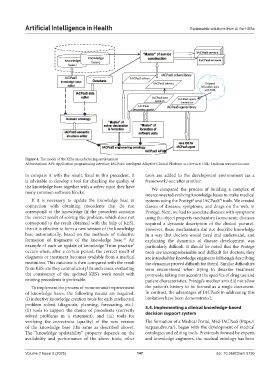
            Figure 4. The model of the KESs manufacturing environment
            Abbreviations: API: Application programming interface; IACPaaS: Intelligent Adaptive Clinical Platform as a Service; URL: Uniform resource locator.

            to compare it with the result, fixed in this precedent. It   tools  are  added  to the  development  environment  (as  a
            is advisable to develop a tool for checking the quality of   framework) one after another.
            the knowledge base together with a solver since they have   We compared the process of building a complex of
            many common software blocks.                       interconnected evolving knowledge bases to make medical
              If it is necessary to update the knowledge base in   systems using the Protégé  and IACPaaS  tools. We created
                                                                                   6
                                                                                              30
            connection with obtaining precedents that do not   classes of diseases, symptoms, and drugs on the web, in
            correspond  to  the  knowledge  (if  the  precedent  contains   Protégé. Next, we had to associate diseases with symptoms
            the correct result of solving the problem, which does not   using the object property mechanism (some acute diseases
            correspond to the result obtained with the help of KES),   required a dynamic description of the clinical picture).
            then it is effective to form a new version of the knowledge   However, these mechanisms did not describe knowledge
            base automatically, based on the methods of inductive   in a  way that doctors would need and  understand, and
            formation of fragments of the knowledge base.  An   explaining the  dynamics  of  disease  development was
                                                     29
            example of such an update of knowledge “from practice”   particularly difficult. It should be noted that the Protege
            occurs when, after a certain period, the correct result of   tools are incomprehensible and difficult for doctors; they
            diagnosis or treatment becomes available from a medical   are intended for knowledge engineers (although describing
            institution. This outcome is then compared with the result   the dynamics proved difficult for them). Similar difficulties
            from KES: are they contradictory? In such cases, evaluating   were encountered when trying to describe treatment
            the consistency of the updated KES’s work result with   protocols, taking into account the specifics of drug use and
            existing precedents is preferable.                 patient characteristics. Protégé’s mechanisms did not allow
              To implement the process of monotonous improvement   the patient’s history to be formed as a single document.
            of knowledge bases, the following means are required:   In contrast, the advantages of IACPaaS in addressing this
            (i) inductive knowledge creation tools for each intellectual   limitation have been demonstrated.
            problem solved (diagnosis, planning, forecasting, etc.),   5.4. Implementing a clinical knowledge-based
            (ii)  tools to support the choice of precedents (correctly   decision support system
            solved problems in a statement), and (iii) tools for
            verifying the correctness (quality) of the new version   The formation of a Medical Portal, Med-IACPaaS (https://
            of the knowledge base (the same as described above).   iacpaas.dvo.ru/), began with the development of medical
            The “knowledge updatability” property depends on the   ontologies and editing tools. Previously formed by experts
            availability and performance of the above tools; other   and knowledge engineers, the medical ontology has been


            Volume 2 Issue 3 (2025)                        147                               doi: 10.36922/aih.5736

