


Page 62 - AIH-2-3
P. 62
Artificial Intelligence in Health                            AI in medical diagnostics: A multi-disease approach


                                                               IoT-based systems, using algorithms such as random
                                                               forest, have been developed to monitor patient activities
                                                               and predict health conditions in real time. One example is
                                                               a hybrid IoT model that utilizes random forest techniques
                                                               to predict T2D, demonstrating high predictive capability
                                                               and aiding in the early intervention. AI-powered mobile
                                                               platforms for real-time disease monitoring further improve
                                                               patient care and support healthcare providers in managing
                                                               complex cases effectively.

                                                               8.4. Superior performance of DL in medical image
                                                               analysis

                                                               DL models, particularly through CNNs, have demonstrated
                                                               remarkable performance in medical image analysis. CNNs
                                                               have been effectively used to identify malaria-infected
            Figure 4. The accuracy of AI techniques in disease diagnosis. The bar
            chart illustrates the classification accuracy of two AI techniques: Deep   blood cells, while other ML models, including Naïve
            learning and machine learning. The accuracy percentage for each   Bayes, SVM, and gradient boosting, have shown success in
            technique is calculated as the ratio of correctly classified instances to the   diagnosing various diseases.
            total number of instances in the dataset.
            Notes: Classification Accuracy: This metric measures how often the AI   For instance, a DL model called LAPNet, using a pyramid-
            model correctly predicts the class or category of a given data point. It’s   based architecture and attention mechanisms, proved highly
            calculated by dividing the number of correct predictions by the total   effective in detecting and grading diabetic retinopathy from
            number of predictions. Percentage Derivation: In the context of the   medical images. Region aggregation graph convolutional
            bar chart, the height of each bar represents the classification accuracy
            percentage. For instance, if the Deep Learning bar reaches 80 on the y-axis,   networks have also been applied in medical imaging tasks,
            it means the model achieved an 80% accuracy in classifying the data.   such as bone age estimation using CT and MRI scans, further
            Abbreviations: AI: Artificial intelligence; DL: Deep learning;   enhancing diagnostic accuracy in radiology.
            ML: Machine learning.
                                                                 The research findings illustrate that DL methods generally
                                                               outperform traditional ML models, especially when
                                                               working with large datasets and complex medical images.
                                                               DL techniques not only provide high diagnostic accuracy
                                                               but also offer frameworks for real-time patient monitoring
                                                               and tailored treatment options, paving the way for improved
                                                               patient outcomes and healthcare efficiency. Through
                                                               AI-driven medical diagnostics, healthcare providers can
                                                               achieve early detection, personalized treatments, and better
                                                               patient management, setting a new standard for care quality.
                                                               8.5. Challenges and future directions
                                                               While AI’s potential in healthcare is immense, the field
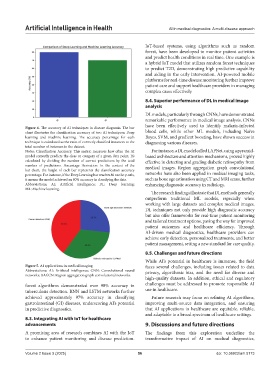
            Figure 5. AI applications in medical imaging       faces several challenges, including issues related to data
            Abbreviations: AI: Artificial intelligence; CNN: Convolutional neural   privacy, algorithmic bias, and the need for diverse and
            networks; RAGCN: Region aggregation graph convolutional networks.
                                                               high-quality datasets. In addition, ethical and regulatory
            forest algorithms demonstrated over 98% accuracy in   challenges must be addressed to promote responsible AI
            tuberculosis detection. RNN and LSTM networks further   use in healthcare.
            achieved approximately 97% accuracy in classifying   Future research may focus on refining AI algorithms,
            gastrointestinal (GI) diseases, underscoring AI’s potential   improving multi-source data integration, and ensuring
            in predictive diagnostics.                         that AI applications in healthcare are equitable, reliable,
                                                               and adaptable to a broad spectrum of healthcare settings.
            8.3. Integrating AI with IoT for healthcare
            advancements                                       9. Discussions and future directions

            A promising area of research combines AI with the IoT   The findings from this exploration underline the
            to enhance patient monitoring and disease prediction.   transformative impact  of  AI on medical diagnostics,


            Volume 2 Issue 3 (2025)                         56                               doi: 10.36922/aih.5173

